 FT
FT

Automatic translation into English is shown. It is cached for future readers; the original remains authoritative.
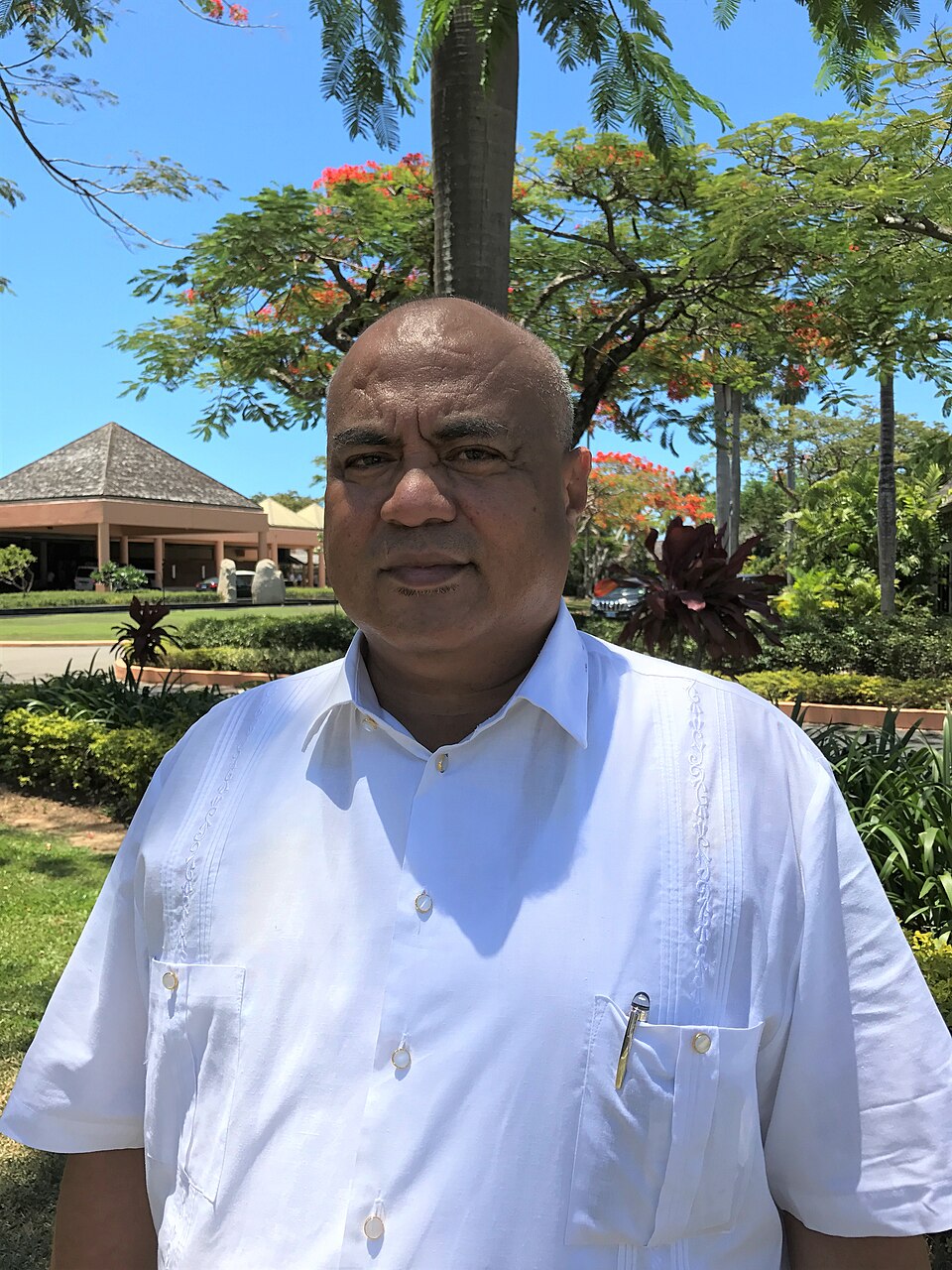
The Honourable Feleti Teo Prime Minister of Tuvalu Government of Tuvalu Funafuti, Tuvalu
Mr. Prime Minister,
Today I write to you as The Observer of Vanishing Horizons.
I have watched nations that command armies.
I have watched nations that command markets.
I have watched nations that command attention.
And I have also watched nations that command something far more fragile:
time.
Because time behaves differently when land itself is uncertain.
And that is why today my attention turns to Tuvalu.
For most of the world, Tuvalu is almost invisible.
A name that appears occasionally in climate reports.
A dot in the Pacific.
A statistical curiosity in population tables.
But for the people who live there, Tuvalu is not small.
It is complete.
It contains schools, families, churches, government offices, traditions, hopes, disappointments, daily routines, and futures still being written.
It is a country in the full human sense of the word.
Even if geography makes it one of the most physically fragile countries on Earth.
Mr. Prime Minister,
Tuvalu is often described in external discourse through one dominant theme:
climate vulnerability.
Rising sea levels.
Coastal erosion.
Saltwater intrusion.
Storm surges.
The possibility of land loss.
But this framing, while technically accurate, is emotionally incomplete.
Because it risks reducing a living society to a physical risk profile.
And Tuvalu is not a risk profile.
It is a society.
Children still go to school in Funafuti.
Families still gather in churches.
Government still functions.
Markets still operate.
People still work, argue, plan, love, and hope.
Life continues not as abstraction, but as routine reality.
Mr. Prime Minister,
What makes Tuvalu unique is not only its size.
It is the existential condition of awareness.
Few nations live with such constant global attention on their physical survival.
Most countries worry about economic growth, inflation, infrastructure, elections.
Tuvalu must also think about whether its land will remain stable for the next generation.
This creates a psychological burden that is difficult for larger nations to fully comprehend.
Because in most countries, the assumption is permanence.
In Tuvalu, permanence must be actively defended.
Not only politically.
But physically.
And even existentially.
Mr. Prime Minister,
Daily life in Tuvalu is built on strong community structures.
People know each other.
Families are interconnected.
Church life plays a central role.
Tradition remains deeply embedded in social identity.
At the same time, modern pressures are present.
Limited job opportunities.
Dependence on imported goods.
Migration of young people toward New Zealand and Australia.
This creates a quiet tension:
between staying and leaving.
Between continuity and relocation.
Between identity anchored in land and identity carried abroad.
Mr. Prime Minister,
Tuvalu is also becoming a symbol in global climate diplomacy.
Not by choice, but by circumstance.
It is often cited in international forums as one of the most vulnerable nations on Earth.
But there is a paradox here.
The world speaks about Tuvalu frequently.
Yet Tuvalu has relatively little influence over the systems that determine its future.
This imbalance between visibility and power is one of the defining injustices of the modern global order.
And yet Tuvalu continues to function as a state.
Continue to educate its children.
Continue to maintain governance.
Continue to preserve identity.
This is not weakness.
This is endurance.
Mr. Prime Minister,
When I observe Tuvalu, I do not see a disappearing country.
I see a country that forces the world to confront uncomfortable questions:
What does sovereignty mean if land becomes unstable?
What does citizenship mean if people migrate?
What does identity mean if geography changes?
What does continuity mean in a world that is physically transforming?
Tuvalu does not merely suffer history.
It participates in redefining it.
Mr. Prime Minister,
There is something deeply human in Tuvalu that larger nations often lose:
clarity.
In larger societies, complexity often hides responsibility.
In Tuvalu, reality is visible.
The sea is visible.
The limits are visible.
The challenges are visible.
And so is resilience.
This clarity is not a burden only.
It is also a form of truth.
Respectfully,
The Observer of Vanishing Horizons
P.S. A Citizen's Audit of the Country
• Stability and Security: 4.0 / 5
Tuvalu maintains stable governance and strong community cohesion, despite external environmental pressures.
• Economy and Standard of Living: 2.5 / 5
Economic capacity is limited, with heavy reliance on imports, aid, and external employment opportunities.
• Social Well-Being: 4.5 / 5
Strong family networks, church-centered community life, and cultural continuity provide high social cohesion.
• Development and Future Prospects: 3.0 / 5
Future development is highly constrained by geography and climate risk, but adaptive capacity and international engagement remain important strengths.
Final Score: 3.50 / 5 — A Nation That Challenges the Definition of Permanence
Tuvalu is not defined by its size.
It is defined by the fact that it exists at the frontier of one of the most fundamental questions of our time:
what it means for a nation to remain a nation when the ground itself is no longer guaranteed.
Mr. Prime Minister,
Today I write to you as The Observer of Vanishing Horizons.
I have watched nations that command armies.
I have watched nations that command markets.
I have watched nations that command attention.
And I have also watched nations that command something far more fragile:
time.
Because time behaves differently when land itself is uncertain.
And that is why today my attention turns to Tuvalu.
For most of the world, Tuvalu is almost invisible.
A name that appears occasionally in climate reports.
A dot in the Pacific.
A statistical curiosity in population tables.
But for the people who live there, Tuvalu is not small.
It is complete.
It contains schools, families, churches, government offices, traditions, hopes, disappointments, daily routines, and futures still being written.
It is a country in the full human sense of the word.
Even if geography makes it one of the most physically fragile countries on Earth.
Mr. Prime Minister,
Tuvalu is often described in external discourse through one dominant theme:
climate vulnerability.
Rising sea levels.
Coastal erosion.
Saltwater intrusion.
Storm surges.
The possibility of land loss.
But this framing, while technically accurate, is emotionally incomplete.
Because it risks reducing a living society to a physical risk profile.
And Tuvalu is not a risk profile.
It is a society.
Children still go to school in Funafuti.
Families still gather in churches.
Government still functions.
Markets still operate.
People still work, argue, plan, love, and hope.
Life continues not as abstraction, but as routine reality.
Mr. Prime Minister,
What makes Tuvalu unique is not only its size.
It is the existential condition of awareness.
Few nations live with such constant global attention on their physical survival.
Most countries worry about economic growth, inflation, infrastructure, elections.
Tuvalu must also think about whether its land will remain stable for the next generation.
This creates a psychological burden that is difficult for larger nations to fully comprehend.
Because in most countries, the assumption is permanence.
In Tuvalu, permanence must be actively defended.
Not only politically.
But physically.
And even existentially.
Mr. Prime Minister,
Daily life in Tuvalu is built on strong community structures.
People know each other.
Families are interconnected.
Church life plays a central role.
Tradition remains deeply embedded in social identity.
At the same time, modern pressures are present.
Limited job opportunities.
Dependence on imported goods.
Migration of young people toward New Zealand and Australia.
This creates a quiet tension:
between staying and leaving.
Between continuity and relocation.
Between identity anchored in land and identity carried abroad.
Mr. Prime Minister,
Tuvalu is also becoming a symbol in global climate diplomacy.
Not by choice, but by circumstance.
It is often cited in international forums as one of the most vulnerable nations on Earth.
But there is a paradox here.
The world speaks about Tuvalu frequently.
Yet Tuvalu has relatively little influence over the systems that determine its future.
This imbalance between visibility and power is one of the defining injustices of the modern global order.
And yet Tuvalu continues to function as a state.
Continue to educate its children.
Continue to maintain governance.
Continue to preserve identity.
This is not weakness.
This is endurance.
Mr. Prime Minister,
When I observe Tuvalu, I do not see a disappearing country.
I see a country that forces the world to confront uncomfortable questions:
What does sovereignty mean if land becomes unstable?
What does citizenship mean if people migrate?
What does identity mean if geography changes?
What does continuity mean in a world that is physically transforming?
Tuvalu does not merely suffer history.
It participates in redefining it.
Mr. Prime Minister,
There is something deeply human in Tuvalu that larger nations often lose:
clarity.
In larger societies, complexity often hides responsibility.
In Tuvalu, reality is visible.
The sea is visible.
The limits are visible.
The challenges are visible.
And so is resilience.
This clarity is not a burden only.
It is also a form of truth.
Respectfully,
The Observer of Vanishing Horizons
P.S. A Citizen's Audit of the Country
• Stability and Security: 4.0 / 5
Tuvalu maintains stable governance and strong community cohesion, despite external environmental pressures.
• Economy and Standard of Living: 2.5 / 5
Economic capacity is limited, with heavy reliance on imports, aid, and external employment opportunities.
• Social Well-Being: 4.5 / 5
Strong family networks, church-centered community life, and cultural continuity provide high social cohesion.
• Development and Future Prospects: 3.0 / 5
Future development is highly constrained by geography and climate risk, but adaptive capacity and international engagement remain important strengths.
Final Score: 3.50 / 5 — A Nation That Challenges the Definition of Permanence
Tuvalu is not defined by its size.
It is defined by the fact that it exists at the frontier of one of the most fundamental questions of our time:
what it means for a nation to remain a nation when the ground itself is no longer guaranteed.
Reader response
Report
Share URL: https://lettertoleader.com/en/tuvalu/prime-minister/195-open-letter-to-the-prime-minister-of-tuvalu