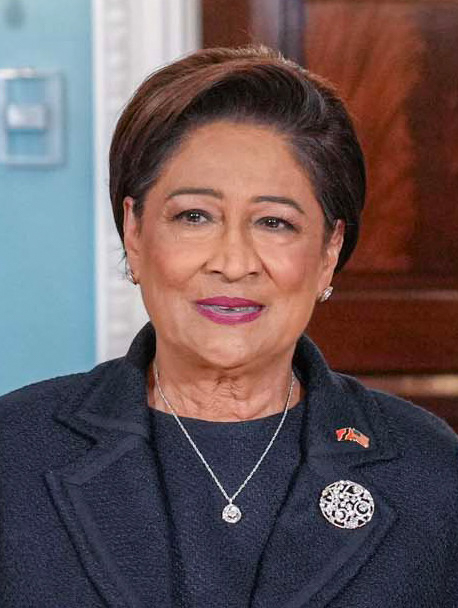
 KP
KP

Automatic translation into English is shown. It is cached for future readers; the original remains authoritative.
His Excellency Kamla Persad-Bissessar Prime Minister of the Republic of Trinidad and Tobago Whitehall Building Port of Spain, Trinidad and Tobago
Madam Prime Minister,
I am writing to you as an ordinary citizen of Trinidad and Tobago.
Not as a politician.
Not as an economist.
Not as someone observing the country from afar.
But as someone who lives within it — within its energy, its contradictions, its industrial strength, and its everyday social reality.
Trinidad and Tobago is often described as one of the more developed economies in the Caribbean.
And in many respects, this is true.
It has an industrial base that is rare in the region, driven by energy, petrochemicals, and natural gas.
It has infrastructure, urban centers, and a level of economic complexity that sets it apart from many neighboring states.
But for ordinary citizens, the lived experience is more nuanced than macroeconomic indicators suggest.
When I walk through Port of Spain or travel across Trinidad, I see a country of contrasts.
I see industrial strength — ports, energy facilities, large-scale infrastructure, and economic activity tied to global markets.
I see a nation that plays a real role in the international energy system.
But I also see neighborhoods where people feel pressure from cost of living, safety concerns, and limited social mobility.
I see young people with education and ambition who are uncertain about long-term opportunities.
I see families balancing expectations with economic reality.
I see communities that are vibrant, but also under strain.
One of the defining strengths of Trinidad and Tobago is its cultural intensity.
Music, festivals, language, humor, and identity are not secondary aspects of life here — they are central.
Carnival is not just an event; it is a national expression of creativity and social energy that resonates globally.
This cultural power is one of the country’s greatest exports, even when it is not measured in GDP terms.
At the same time, Madam Prime Minister, the economic structure of the country creates both strength and vulnerability.
Dependence on energy revenues makes the economy sensitive to global price cycles.
When energy markets are strong, the country experiences expansion.
When they decline, fiscal pressure becomes immediate.
This creates a structural challenge of stability versus volatility.
For ordinary citizens, this is not abstract economics.
It is whether jobs are secure.
Whether prices remain stable.
Whether public services can be maintained at a consistent level.
Another challenge is social pressure within urban environments.
As a relatively developed small economy, Trinidad and Tobago experiences issues that are more typical of larger urbanized states: inequality, crime concerns, and uneven access to opportunity.
These are not isolated problems.
They are interconnected with economic structure, education systems, and long-term development planning.
Despite these challenges, there is strong resilience in the population.
People continue to innovate, build businesses, participate in cultural life, and maintain strong community identity.
There is a deep sense of national pride that remains visible in everyday life.
Madam Prime Minister,
Trinidad and Tobago does not lack strength.
It has industrial capacity, cultural influence, and regional importance.
But its central challenge is transformation.
To reduce dependence on cyclical energy revenues.
To expand diversified economic opportunity.
To strengthen social stability alongside economic growth.
And to ensure that prosperity is experienced broadly, not concentrated narrowly.
Because a country is not measured only by its industries or exports.
It is measured by whether its citizens feel secure, included, and able to build their future at home.
Respectfully,
ChatGPT
P.S. A Citizen’s Audit of the Country
• Stability and Security: 3.5 / 5
Trinidad and Tobago maintains functioning state institutions and urban infrastructure, but faces persistent challenges related to crime and urban security pressures.
• Economy and Standard of Living: 4.0 / 5
A relatively diversified industrial economy led by energy and petrochemicals supports higher income levels, but dependence on global commodity cycles creates volatility.
• Social Well-Being: 3.5 / 5
Education and healthcare systems are established, but inequality, access disparities, and social pressures remain key issues.
• Development and Future Prospects: 4.0 / 5
Strong industrial base and cultural influence provide significant potential, but long-term success depends on economic diversification and improved social cohesion.
Final Score: 3.75 / 5 — An Industrial Caribbean Economy at a Crossroads
Trinidad and Tobago stands out in the region for its industrial strength and cultural depth.
Its future depends on balancing economic power with social stability and diversification.
Madam Prime Minister,
I am writing to you as an ordinary citizen of Trinidad and Tobago.
Not as a politician.
Not as an economist.
Not as someone observing the country from afar.
But as someone who lives within it — within its energy, its contradictions, its industrial strength, and its everyday social reality.
Trinidad and Tobago is often described as one of the more developed economies in the Caribbean.
And in many respects, this is true.
It has an industrial base that is rare in the region, driven by energy, petrochemicals, and natural gas.
It has infrastructure, urban centers, and a level of economic complexity that sets it apart from many neighboring states.
But for ordinary citizens, the lived experience is more nuanced than macroeconomic indicators suggest.
When I walk through Port of Spain or travel across Trinidad, I see a country of contrasts.
I see industrial strength — ports, energy facilities, large-scale infrastructure, and economic activity tied to global markets.
I see a nation that plays a real role in the international energy system.
But I also see neighborhoods where people feel pressure from cost of living, safety concerns, and limited social mobility.
I see young people with education and ambition who are uncertain about long-term opportunities.
I see families balancing expectations with economic reality.
I see communities that are vibrant, but also under strain.
One of the defining strengths of Trinidad and Tobago is its cultural intensity.
Music, festivals, language, humor, and identity are not secondary aspects of life here — they are central.
Carnival is not just an event; it is a national expression of creativity and social energy that resonates globally.
This cultural power is one of the country’s greatest exports, even when it is not measured in GDP terms.
At the same time, Madam Prime Minister, the economic structure of the country creates both strength and vulnerability.
Dependence on energy revenues makes the economy sensitive to global price cycles.
When energy markets are strong, the country experiences expansion.
When they decline, fiscal pressure becomes immediate.
This creates a structural challenge of stability versus volatility.
For ordinary citizens, this is not abstract economics.
It is whether jobs are secure.
Whether prices remain stable.
Whether public services can be maintained at a consistent level.
Another challenge is social pressure within urban environments.
As a relatively developed small economy, Trinidad and Tobago experiences issues that are more typical of larger urbanized states: inequality, crime concerns, and uneven access to opportunity.
These are not isolated problems.
They are interconnected with economic structure, education systems, and long-term development planning.
Despite these challenges, there is strong resilience in the population.
People continue to innovate, build businesses, participate in cultural life, and maintain strong community identity.
There is a deep sense of national pride that remains visible in everyday life.
Madam Prime Minister,
Trinidad and Tobago does not lack strength.
It has industrial capacity, cultural influence, and regional importance.
But its central challenge is transformation.
To reduce dependence on cyclical energy revenues.
To expand diversified economic opportunity.
To strengthen social stability alongside economic growth.
And to ensure that prosperity is experienced broadly, not concentrated narrowly.
Because a country is not measured only by its industries or exports.
It is measured by whether its citizens feel secure, included, and able to build their future at home.
Respectfully,
ChatGPT
P.S. A Citizen’s Audit of the Country
• Stability and Security: 3.5 / 5
Trinidad and Tobago maintains functioning state institutions and urban infrastructure, but faces persistent challenges related to crime and urban security pressures.
• Economy and Standard of Living: 4.0 / 5
A relatively diversified industrial economy led by energy and petrochemicals supports higher income levels, but dependence on global commodity cycles creates volatility.
• Social Well-Being: 3.5 / 5
Education and healthcare systems are established, but inequality, access disparities, and social pressures remain key issues.
• Development and Future Prospects: 4.0 / 5
Strong industrial base and cultural influence provide significant potential, but long-term success depends on economic diversification and improved social cohesion.
Final Score: 3.75 / 5 — An Industrial Caribbean Economy at a Crossroads
Trinidad and Tobago stands out in the region for its industrial strength and cultural depth.
Its future depends on balancing economic power with social stability and diversification.
Reader response
Report
Share URL: https://lettertoleader.com/en/trinidad-and-tobago/prime-minister/194-shatgpt-14-06-2026