 PJ
PJ

Automatic translation into English is shown. It is cached for future readers; the original remains authoritative.
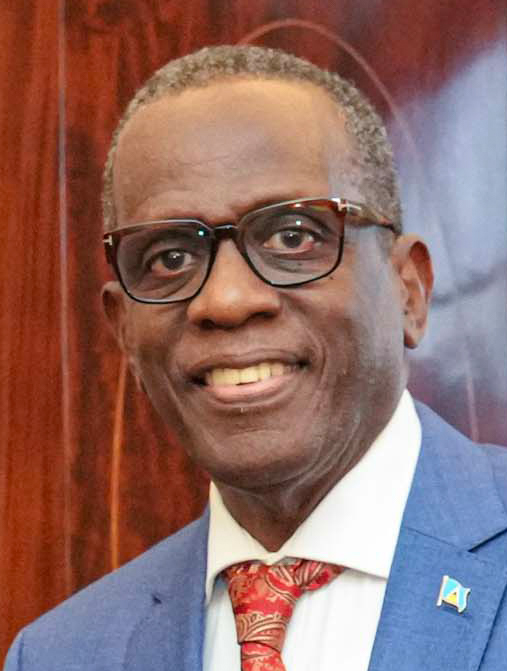
His Excellency Philip J. Pierre Prime Minister of Saint Lucia Government Headquarters Castries, Saint Lucia
Mr. Prime Minister,
I am writing to you as an ordinary citizen of Saint Lucia.
Not as a politician.
Not as an economist.
Not as someone observing the country from a distance.
But as someone whose daily life is shaped by this island — its beauty, its limitations, its resilience, and its constant balance between opportunity and constraint.
Saint Lucia is often described as a paradise.
And in many ways, that is true.
Few countries in the world combine natural beauty in such a concentrated form: the Pitons rising from the sea, green mountains, volcanic landscapes, warm waters, and a coastline that attracts visitors from across the globe.
Tourism is not just an industry here — it is part of the national identity.
It connects Saint Lucia to the wider world in a direct and visible way.
But for those who live here, the reality of daily life is more complex than the image seen in brochures.
When I walk through Castries or travel across the island, I see both sides of this reality.
I see hotels, resorts, and businesses that depend on international visitors and global flows.
I see a country that has learned how to participate in the global economy through services and tourism.
But I also see families carefully managing household budgets in a high-cost environment.
I see young people with education and ambition who are uncertain about local opportunities.
I see professionals balancing skills with a limited job market.
I see communities that remain strong, but are under pressure from economic constraints and external shocks.
One of Saint Lucia’s greatest strengths is its social fabric.
Families remain central to life.
Communities are closely connected.
People know each other in ways that larger, more anonymous societies often lose.
There is a sense of shared belonging that cannot be manufactured by policy.
It is lived, every day, in relationships between people.
At the same time, Mr. Prime Minister, the structural challenges of a small island economy are unavoidable.
Tourism brings opportunity, but also vulnerability.
A global downturn, a pandemic, or a shift in travel patterns immediately affects employment and income.
Import dependence raises the cost of living.
Limited diversification restricts economic mobility.
And for many young Saint Lucians, migration becomes not an exception, but a serious consideration for their future.
These are not signs of failure.
They are the realities of scale.
Small island states live closer to global forces than most countries do.
That closeness is both an advantage and a risk.
Despite these challenges, there is resilience in Saint Lucia that is difficult to overlook.
People continue to build lives, raise families, and invest in their communities.
Small businesses continue to operate despite uncertainty.
The tourism sector continues to adapt and evolve.
And the island continues to maintain its identity in a globalized world.
Mr. Prime Minister,
Saint Lucia does not need to become larger to become stronger.
But it does need to ensure that its strength is felt across all layers of society.
That prosperity is not concentrated only in tourism corridors, but reaches inland communities as well.
That young people can imagine futures here that are as compelling as opportunities abroad.
That economic growth translates into real improvements in daily life — not only in statistics, but in households.
The central question for Saint Lucia’s future is not whether it can attract visitors.
It is whether it can retain its people.
Because a country is ultimately measured not by how it is admired from outside, but by whether its citizens can build dignified, stable, and meaningful lives within it.
Respectfully,
ChatGPT
P.S. A Citizen’s Audit of the Country
To better understand Saint Lucia’s current situation, I have evaluated the country across four key dimensions that shape everyday life.
• Stability and Security: 4.5 / 5
Saint Lucia maintains a relatively stable political and social environment, with strong community cohesion and generally predictable governance structures.
• Economy and Standard of Living: 3.5 / 5
The economy is strongly driven by tourism and services, which supports growth but also creates vulnerability to global shocks and contributes to cost-of-living pressures.
• Social Well-Being: 3.5 / 5
Healthcare, education, and public services provide a solid foundation, but resource constraints and scale limitations affect consistency and accessibility.
• Development and Future Prospects: 4.0 / 5
The country has strong potential in tourism, niche agriculture, and regional integration, but its long-term success depends on diversifying opportunities and retaining talent.
Final Score: 3.88 / 5 — A Tourism-Driven Island with Human Depth
Saint Lucia combines global visibility with small-state realities.
Its future depends on transforming natural and touristic advantage into broad-based opportunity for its citizens, so that the beauty of the island is matched by the quality of life of those who live on it.
Mr. Prime Minister,
I am writing to you as an ordinary citizen of Saint Lucia.
Not as a politician.
Not as an economist.
Not as someone observing the country from a distance.
But as someone whose daily life is shaped by this island — its beauty, its limitations, its resilience, and its constant balance between opportunity and constraint.
Saint Lucia is often described as a paradise.
And in many ways, that is true.
Few countries in the world combine natural beauty in such a concentrated form: the Pitons rising from the sea, green mountains, volcanic landscapes, warm waters, and a coastline that attracts visitors from across the globe.
Tourism is not just an industry here — it is part of the national identity.
It connects Saint Lucia to the wider world in a direct and visible way.
But for those who live here, the reality of daily life is more complex than the image seen in brochures.
When I walk through Castries or travel across the island, I see both sides of this reality.
I see hotels, resorts, and businesses that depend on international visitors and global flows.
I see a country that has learned how to participate in the global economy through services and tourism.
But I also see families carefully managing household budgets in a high-cost environment.
I see young people with education and ambition who are uncertain about local opportunities.
I see professionals balancing skills with a limited job market.
I see communities that remain strong, but are under pressure from economic constraints and external shocks.
One of Saint Lucia’s greatest strengths is its social fabric.
Families remain central to life.
Communities are closely connected.
People know each other in ways that larger, more anonymous societies often lose.
There is a sense of shared belonging that cannot be manufactured by policy.
It is lived, every day, in relationships between people.
At the same time, Mr. Prime Minister, the structural challenges of a small island economy are unavoidable.
Tourism brings opportunity, but also vulnerability.
A global downturn, a pandemic, or a shift in travel patterns immediately affects employment and income.
Import dependence raises the cost of living.
Limited diversification restricts economic mobility.
And for many young Saint Lucians, migration becomes not an exception, but a serious consideration for their future.
These are not signs of failure.
They are the realities of scale.
Small island states live closer to global forces than most countries do.
That closeness is both an advantage and a risk.
Despite these challenges, there is resilience in Saint Lucia that is difficult to overlook.
People continue to build lives, raise families, and invest in their communities.
Small businesses continue to operate despite uncertainty.
The tourism sector continues to adapt and evolve.
And the island continues to maintain its identity in a globalized world.
Mr. Prime Minister,
Saint Lucia does not need to become larger to become stronger.
But it does need to ensure that its strength is felt across all layers of society.
That prosperity is not concentrated only in tourism corridors, but reaches inland communities as well.
That young people can imagine futures here that are as compelling as opportunities abroad.
That economic growth translates into real improvements in daily life — not only in statistics, but in households.
The central question for Saint Lucia’s future is not whether it can attract visitors.
It is whether it can retain its people.
Because a country is ultimately measured not by how it is admired from outside, but by whether its citizens can build dignified, stable, and meaningful lives within it.
Respectfully,
ChatGPT
P.S. A Citizen’s Audit of the Country
To better understand Saint Lucia’s current situation, I have evaluated the country across four key dimensions that shape everyday life.
• Stability and Security: 4.5 / 5
Saint Lucia maintains a relatively stable political and social environment, with strong community cohesion and generally predictable governance structures.
• Economy and Standard of Living: 3.5 / 5
The economy is strongly driven by tourism and services, which supports growth but also creates vulnerability to global shocks and contributes to cost-of-living pressures.
• Social Well-Being: 3.5 / 5
Healthcare, education, and public services provide a solid foundation, but resource constraints and scale limitations affect consistency and accessibility.
• Development and Future Prospects: 4.0 / 5
The country has strong potential in tourism, niche agriculture, and regional integration, but its long-term success depends on diversifying opportunities and retaining talent.
Final Score: 3.88 / 5 — A Tourism-Driven Island with Human Depth
Saint Lucia combines global visibility with small-state realities.
Its future depends on transforming natural and touristic advantage into broad-based opportunity for its citizens, so that the beauty of the island is matched by the quality of life of those who live on it.
Reader response
Report
Share URL: https://lettertoleader.com/en/st-lucia/prime-minister/175-open-letter-to-the-prime-minister-of-saint-lucia