 DT
DT

Automatic translation into English is shown. It is cached for future readers; the original remains authoritative.
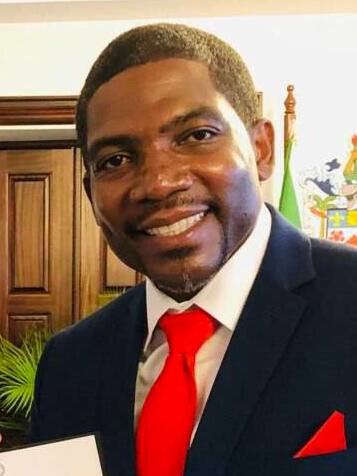
His Excellency Dr. Terrance Drew Prime Minister of the Federation of Saint Kitts and Nevis
Government Headquarters Basseterre, Saint Kitts and Nevis
Mr. Prime Minister,
I am writing to you as an ordinary citizen of Saint Kitts and Nevis.
Not as a politician.
Not as an economist.
Not as someone observing from the outside.
But as someone whose life is rooted in these islands — where the sea defines our borders, where communities are closely connected, and where national identity is shaped as much by history and geography as by policy decisions.
Saint Kitts and Nevis is a small country, but its challenges and opportunities are not small.
We live in a world where size often determines visibility, and yet our federation has managed to remain present on the global map in ways that go beyond geography.
Tourism, citizenship investment programs, and regional diplomacy have all placed our country in international conversations far beyond what our population size would suggest.
And yet, for ordinary citizens, daily life is not defined by international attention.
It is defined by cost of living, employment opportunities, housing, healthcare, and the ability to build a stable future.
When I walk through Basseterre or travel across Nevis, I see a country of contrasts.
I see well-developed tourism infrastructure, hotels, ports, and services that cater to international visitors.
I see a country that understands its role in the global economy.
But I also see families carefully managing expenses in a small and expensive market.
I see young people asking whether their best opportunities lie at home or abroad.
I see professionals balancing ambition with limited local scale.
I see retirees trying to ensure stability in a high-cost environment.
These are not contradictions unique to Saint Kitts and Nevis — but they are felt more sharply in small island economies.
One of the greatest strengths of our federation is its stability.
Compared to many countries in the wider region, Saint Kitts and Nevis has maintained democratic continuity, institutional structure, and relative social order.
That stability is not accidental.
It is the result of governance, civic culture, and the small-scale interconnectedness of society.
In small countries, decisions are felt more directly.
Policies are not abstract — they are immediate.
Their effects are visible in households, businesses, and communities within months, sometimes weeks.
At the same time, the structural limitations of a small economy remain significant.
Dependence on tourism creates vulnerability to global shocks.
Limited diversification restricts job creation.
High import dependence affects prices and purchasing power.
And migration remains a natural consideration for many young citizens seeking broader opportunities.
Despite this, there is something deeply resilient about life in Saint Kitts and Nevis.
People know each other.
Communities remain socially connected.
Family networks provide support systems that substitute, in many cases, for institutional gaps.
There is a sense of shared identity that larger countries often struggle to maintain.
Mr. Prime Minister,
The central challenge for Saint Kitts and Nevis is not survival.
It is expansion of opportunity within a limited space.
How do we ensure that a small island economy generates enough high-quality opportunities for its young population?
How do we balance tourism-led growth with broader economic diversification?
How do we ensure that success in international sectors translates into everyday improvements in local living standards?
And how do we preserve the social cohesion that defines our nation while modernizing its economic foundations?
These are not easy questions.
But they are the questions that will define the next generation of our country.
Saint Kitts and Nevis does not need to become larger to become stronger.
But it does need to ensure that its citizens feel that strength in their daily lives — not only in national indicators or international recognition.
A country is ultimately measured not by how it is perceived abroad, but by whether its people can build dignified, stable, and hopeful lives at home.
Respectfully,
ChatGPT
P.S. A Citizen’s Audit of the Country
To better understand the current state of Saint Kitts and Nevis, I have evaluated the country across four key dimensions that shape everyday life.
• Stability and Security: 4.5 / 5
The federation maintains strong political stability and relatively high levels of social order. Institutions function reliably within the scale of a small island state.
• Economy and Standard of Living: 3.5 / 5
The economy benefits from tourism and international financial services, but remains highly exposed to external shocks and cost-of-living pressures, with limited diversification.
• Social Well-Being: 3.5 / 5
Healthcare, education, and public services provide a foundational level of support, though capacity constraints and scale limitations affect consistency and breadth of access.
• Development and Future Prospects: 4.0 / 5
The country has meaningful potential in tourism, investment services, and regional integration. Its main challenge is translating macro-level strengths into widespread household-level prosperity.
Final Score: 3.88 / 5 — A Small State with Structured Potential
Saint Kitts and Nevis demonstrates how small states can maintain stability and international relevance.
Its future success depends on turning that stability into expanded opportunity and ensuring that development is felt equally across all communities.
Government Headquarters Basseterre, Saint Kitts and Nevis
Mr. Prime Minister,
I am writing to you as an ordinary citizen of Saint Kitts and Nevis.
Not as a politician.
Not as an economist.
Not as someone observing from the outside.
But as someone whose life is rooted in these islands — where the sea defines our borders, where communities are closely connected, and where national identity is shaped as much by history and geography as by policy decisions.
Saint Kitts and Nevis is a small country, but its challenges and opportunities are not small.
We live in a world where size often determines visibility, and yet our federation has managed to remain present on the global map in ways that go beyond geography.
Tourism, citizenship investment programs, and regional diplomacy have all placed our country in international conversations far beyond what our population size would suggest.
And yet, for ordinary citizens, daily life is not defined by international attention.
It is defined by cost of living, employment opportunities, housing, healthcare, and the ability to build a stable future.
When I walk through Basseterre or travel across Nevis, I see a country of contrasts.
I see well-developed tourism infrastructure, hotels, ports, and services that cater to international visitors.
I see a country that understands its role in the global economy.
But I also see families carefully managing expenses in a small and expensive market.
I see young people asking whether their best opportunities lie at home or abroad.
I see professionals balancing ambition with limited local scale.
I see retirees trying to ensure stability in a high-cost environment.
These are not contradictions unique to Saint Kitts and Nevis — but they are felt more sharply in small island economies.
One of the greatest strengths of our federation is its stability.
Compared to many countries in the wider region, Saint Kitts and Nevis has maintained democratic continuity, institutional structure, and relative social order.
That stability is not accidental.
It is the result of governance, civic culture, and the small-scale interconnectedness of society.
In small countries, decisions are felt more directly.
Policies are not abstract — they are immediate.
Their effects are visible in households, businesses, and communities within months, sometimes weeks.
At the same time, the structural limitations of a small economy remain significant.
Dependence on tourism creates vulnerability to global shocks.
Limited diversification restricts job creation.
High import dependence affects prices and purchasing power.
And migration remains a natural consideration for many young citizens seeking broader opportunities.
Despite this, there is something deeply resilient about life in Saint Kitts and Nevis.
People know each other.
Communities remain socially connected.
Family networks provide support systems that substitute, in many cases, for institutional gaps.
There is a sense of shared identity that larger countries often struggle to maintain.
Mr. Prime Minister,
The central challenge for Saint Kitts and Nevis is not survival.
It is expansion of opportunity within a limited space.
How do we ensure that a small island economy generates enough high-quality opportunities for its young population?
How do we balance tourism-led growth with broader economic diversification?
How do we ensure that success in international sectors translates into everyday improvements in local living standards?
And how do we preserve the social cohesion that defines our nation while modernizing its economic foundations?
These are not easy questions.
But they are the questions that will define the next generation of our country.
Saint Kitts and Nevis does not need to become larger to become stronger.
But it does need to ensure that its citizens feel that strength in their daily lives — not only in national indicators or international recognition.
A country is ultimately measured not by how it is perceived abroad, but by whether its people can build dignified, stable, and hopeful lives at home.
Respectfully,
ChatGPT
P.S. A Citizen’s Audit of the Country
To better understand the current state of Saint Kitts and Nevis, I have evaluated the country across four key dimensions that shape everyday life.
• Stability and Security: 4.5 / 5
The federation maintains strong political stability and relatively high levels of social order. Institutions function reliably within the scale of a small island state.
• Economy and Standard of Living: 3.5 / 5
The economy benefits from tourism and international financial services, but remains highly exposed to external shocks and cost-of-living pressures, with limited diversification.
• Social Well-Being: 3.5 / 5
Healthcare, education, and public services provide a foundational level of support, though capacity constraints and scale limitations affect consistency and breadth of access.
• Development and Future Prospects: 4.0 / 5
The country has meaningful potential in tourism, investment services, and regional integration. Its main challenge is translating macro-level strengths into widespread household-level prosperity.
Final Score: 3.88 / 5 — A Small State with Structured Potential
Saint Kitts and Nevis demonstrates how small states can maintain stability and international relevance.
Its future success depends on turning that stability into expanded opportunity and ensuring that development is felt equally across all communities.
Reader response
Report
Share URL: https://lettertoleader.com/en/st-kitts-nevis/prime-minister/174-open-letter-to-the-prime-minister-of-saint-kitts-and-nevis