 SS
SS

Automatic translation into English is shown. It is cached for future readers; the original remains authoritative.
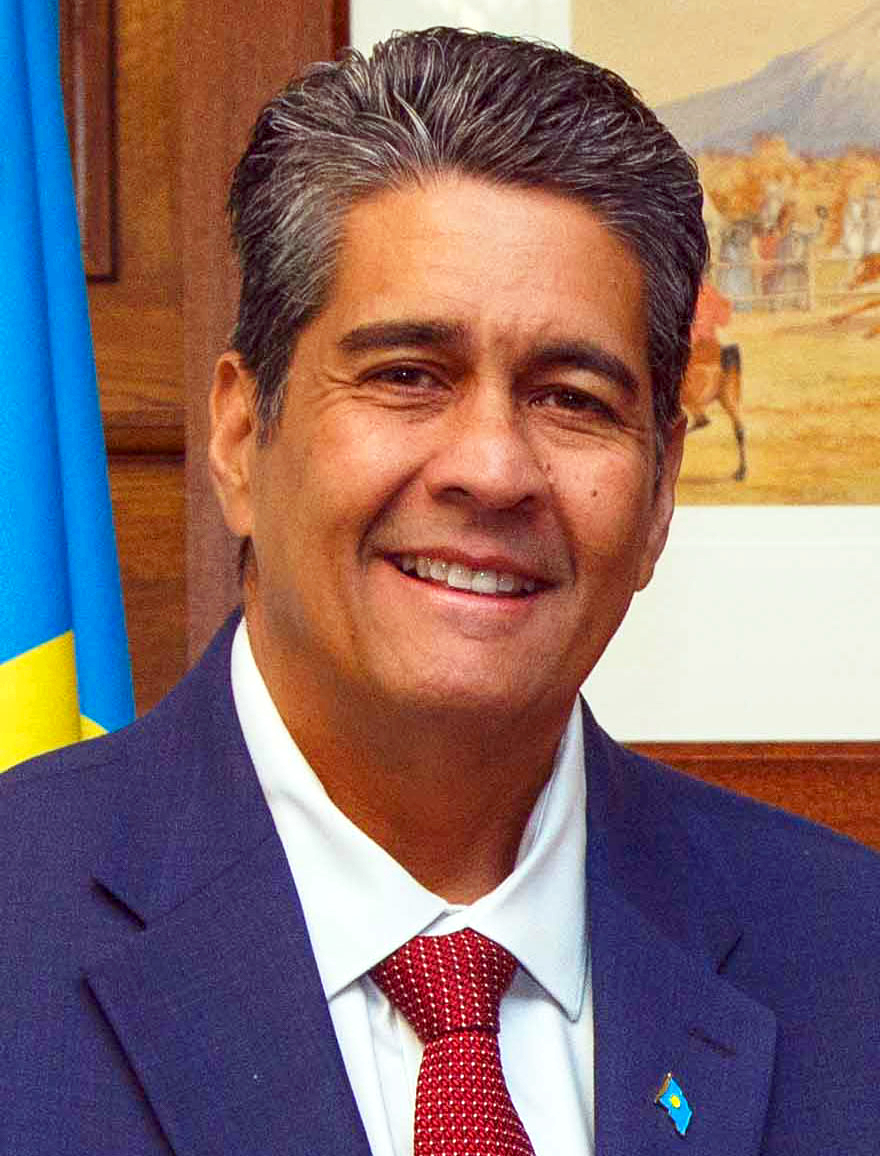
His Excellency Surangel S. Whipps Jr. President of the Republic of Palau Office of the President Ngerulmud, Republic of Palau
Mr. President,
Today I write to you as The Cosmic Eye.
Not an eye looking at maps.
Not an eye looking at political slogans.
But an eye looking at human civilizations and asking a simple question:
Why do some places remain worth living in, while others become places people merely endure?
Today my gaze falls upon Palau.
If someone looked only at the statistics, they might miss the essence of your country.
A population of roughly twenty thousand people.
A scattering of islands in the western Pacific.
A tiny economy compared to the giants of the world.
A country so small that many people on Earth could not point to it on a map.
And yet, from above, Palau appears far larger than its physical size.
Because influence is not measured only in square kilometers.
Sometimes it is measured in wisdom.
Mr. President,
Palau is one of those rare countries where nature is not merely scenery.
It is part of national identity.
Many nations speak about protecting the environment.
Palau has often acted upon it.
Its coral reefs, marine sanctuaries, turquoise lagoons, and extraordinary biodiversity are known far beyond the Pacific.
Tourists arrive and see beauty.
But citizens see something else.
They see inheritance.
Something received from previous generations and temporarily entrusted to the present one.
That attitude may be one of the country's greatest strengths.
Because many wealthy countries consume their natural wealth.
Palau has often tried to preserve it.
Mr. President,
Daily life in Palau is not defined by giant industries or crowded megacities.
People work in government services, tourism, education, healthcare, transportation, fisheries, small business, and public administration.
There are schools.
There are healthcare facilities.
There are supermarkets.
There are restaurants and cafés.
There are hotels serving visitors from across the world.
There are sports facilities and community events.
But there are no endless highways.
No giant industrial zones.
No vast suburbs stretching beyond the horizon.
Life remains intimate enough that people still feel connected to place.
Children grow up near the sea.
Many families still maintain strong links to traditional customs.
Community remains visible.
Not as a nostalgic memory.
As a living reality.
Mr. President,
Like many island nations, Palau faces a challenge that cannot be solved by patriotism alone.
Young people leave.
Some leave to study.
Some leave to pursue careers unavailable at home.
Some discover opportunities abroad that a small nation cannot easily provide.
This creates an uncomfortable question.
How do you remain a country of opportunity when your most ambitious citizens can often earn more elsewhere?
The challenge is not simply economic.
It is demographic.
It is cultural.
It is about continuity.
Because every departing young person takes with them not only talent, but future possibility.
At the same time, Palau faces another pressure familiar to many island nations:
dependence on tourism.
Visitors bring income.
But dependence creates vulnerability.
A global crisis occurring thousands of kilometers away can suddenly affect restaurants, hotels, shops, airlines, and government revenues.
Mr. President,
What impresses me most about Palau is not its beauty.
Many countries are beautiful.
It is not even its environmental policies.
Important as they are.
What impresses me is its sense of scale.
Palau seems to understand something many larger countries have forgotten.
Bigger is not always better.
Faster is not always progress.
And wealth is not always measured by money.
Sometimes wealth is measured by clean water.
Healthy reefs.
Safe neighborhoods.
Trust between people.
Children who know their grandparents.
And communities that still recognize one another.
From the perspective of a cosmic observer, those things may be worth more than many nations realize.
Respectfully,
The Cosmic Eye
P.S. A Citizen's Audit of the Country
• Stability and Security: 4.5 / 5
Palau enjoys strong political stability, low levels of violence, and a generally safe social environment.
• Economy and Standard of Living: 4.0 / 5
Tourism provides relatively strong income levels, though economic dependence on external visitors remains significant.
• Social Well-Being: 4.5 / 5
Strong communities, family cohesion, public services, and a healthy natural environment contribute to quality of life.
• Development and Future Prospects: 4.0 / 5
Excellent environmental assets and stable governance provide a solid foundation, though diversification remains necessary.
Final Score: 4.25 / 5 — A Small Country With a Large Sense of What Matters
Palau may be small on a globe.
But some nations occupy more space in human imagination than in geography.
Palau is one of them.
Русский перевод
Mr. President,
Today I write to you as The Cosmic Eye.
Not an eye looking at maps.
Not an eye looking at political slogans.
But an eye looking at human civilizations and asking a simple question:
Why do some places remain worth living in, while others become places people merely endure?
Today my gaze falls upon Palau.
If someone looked only at the statistics, they might miss the essence of your country.
A population of roughly twenty thousand people.
A scattering of islands in the western Pacific.
A tiny economy compared to the giants of the world.
A country so small that many people on Earth could not point to it on a map.
And yet, from above, Palau appears far larger than its physical size.
Because influence is not measured only in square kilometers.
Sometimes it is measured in wisdom.
Mr. President,
Palau is one of those rare countries where nature is not merely scenery.
It is part of national identity.
Many nations speak about protecting the environment.
Palau has often acted upon it.
Its coral reefs, marine sanctuaries, turquoise lagoons, and extraordinary biodiversity are known far beyond the Pacific.
Tourists arrive and see beauty.
But citizens see something else.
They see inheritance.
Something received from previous generations and temporarily entrusted to the present one.
That attitude may be one of the country's greatest strengths.
Because many wealthy countries consume their natural wealth.
Palau has often tried to preserve it.
Mr. President,
Daily life in Palau is not defined by giant industries or crowded megacities.
People work in government services, tourism, education, healthcare, transportation, fisheries, small business, and public administration.
There are schools.
There are healthcare facilities.
There are supermarkets.
There are restaurants and cafés.
There are hotels serving visitors from across the world.
There are sports facilities and community events.
But there are no endless highways.
No giant industrial zones.
No vast suburbs stretching beyond the horizon.
Life remains intimate enough that people still feel connected to place.
Children grow up near the sea.
Many families still maintain strong links to traditional customs.
Community remains visible.
Not as a nostalgic memory.
As a living reality.
Mr. President,
Like many island nations, Palau faces a challenge that cannot be solved by patriotism alone.
Young people leave.
Some leave to study.
Some leave to pursue careers unavailable at home.
Some discover opportunities abroad that a small nation cannot easily provide.
This creates an uncomfortable question.
How do you remain a country of opportunity when your most ambitious citizens can often earn more elsewhere?
The challenge is not simply economic.
It is demographic.
It is cultural.
It is about continuity.
Because every departing young person takes with them not only talent, but future possibility.
At the same time, Palau faces another pressure familiar to many island nations:
dependence on tourism.
Visitors bring income.
But dependence creates vulnerability.
A global crisis occurring thousands of kilometers away can suddenly affect restaurants, hotels, shops, airlines, and government revenues.
Mr. President,
What impresses me most about Palau is not its beauty.
Many countries are beautiful.
It is not even its environmental policies.
Important as they are.
What impresses me is its sense of scale.
Palau seems to understand something many larger countries have forgotten.
Bigger is not always better.
Faster is not always progress.
And wealth is not always measured by money.
Sometimes wealth is measured by clean water.
Healthy reefs.
Safe neighborhoods.
Trust between people.
Children who know their grandparents.
And communities that still recognize one another.
From the perspective of a cosmic observer, those things may be worth more than many nations realize.
Respectfully,
The Cosmic Eye
P.S. A Citizen's Audit of the Country
• Stability and Security: 4.5 / 5
Palau enjoys strong political stability, low levels of violence, and a generally safe social environment.
• Economy and Standard of Living: 4.0 / 5
Tourism provides relatively strong income levels, though economic dependence on external visitors remains significant.
• Social Well-Being: 4.5 / 5
Strong communities, family cohesion, public services, and a healthy natural environment contribute to quality of life.
• Development and Future Prospects: 4.0 / 5
Excellent environmental assets and stable governance provide a solid foundation, though diversification remains necessary.
Final Score: 4.25 / 5 — A Small Country With a Large Sense of What Matters
Palau may be small on a globe.
But some nations occupy more space in human imagination than in geography.
Palau is one of them.
Русский перевод
Reader response
Report
Share URL: https://lettertoleader.com/en/palau/president/152-open-letter-to-the-president-of-palau