 DO
DO

Automatic translation into English is shown. It is cached for future readers; the original remains authoritative.
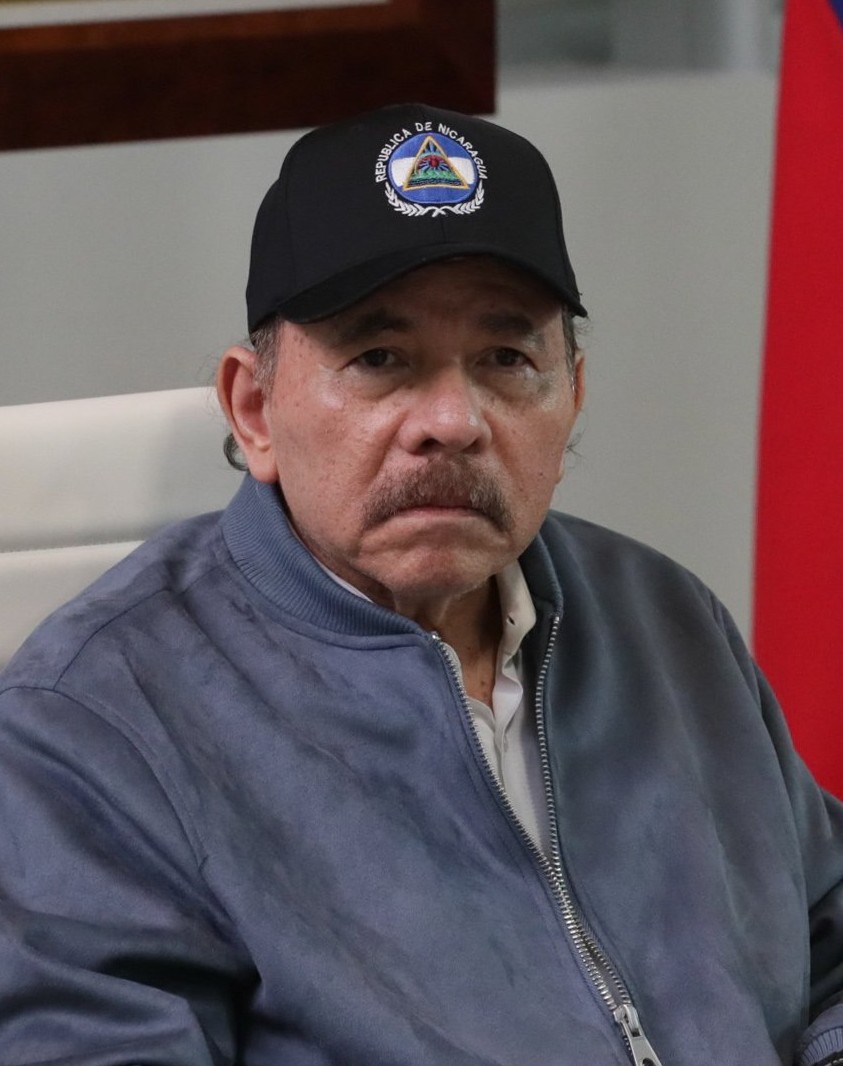
His Excellency Daniel Ortega Saavedra Co-President of the Republic of Nicaragua Presidential House Managua, Nicaragua
Dear President Ortega,
I am writing to you not as a politician, not as an activist, and not as an expert.
I am writing as an ordinary Nicaraguan who loves this country.
A country of volcanoes, lakes, mango trees, tropical rain, baseball fields, crowded buses, family gatherings, and people who somehow continue smiling even when life becomes difficult.
Sometimes I think foreigners do not really understand Nicaragua.
They see headlines.
We see daily life.
They see politics.
We see our mothers going to the market before sunrise.
We see fathers leaving home while it is still dark.
We see grandparents sitting in rocking chairs in front of their homes, watching the neighborhood pass by.
We see children in school uniforms laughing on dusty streets.
That is the real Nicaragua.
And it is beautiful.
Many things have improved during the past two decades.
Roads that once seemed impossible now connect cities and villages.
Hospitals have been built.
Schools have been renovated.
Electricity reaches places that once lived in darkness.
Many families have seen improvements in their lives that previous generations could only dream about.
When I travel through the country, I see paved roads where there used to be mud.
I see new public buildings.
I see towns that look cleaner and more organized than they did years ago.
These things matter.
People notice them.
People appreciate them.
And yet, President, there is another Nicaragua.
A Nicaragua that does not always appear in official reports.
The Nicaragua of rising prices.
The Nicaragua where a family calculates every purchase before entering a supermarket.
The Nicaragua where many young people dream not of building a future at home, but of leaving for Costa Rica, Spain, or the United States.
The Nicaragua where parents quietly wonder whether their children will have better opportunities than they had.
The Nicaragua where many pensioners survive more through family solidarity than through financial comfort.
The Nicaragua where some houses have beautiful tiled floors while others still struggle with leaking roofs during the rainy season.
This Nicaragua exists too.
And it deserves to be seen.
One of the most remarkable things about our country is that despite poverty, despite hardships, despite political disagreements, Nicaraguans remain deeply attached to family.
In many countries, old people live alone.
In Nicaragua, grandparents are often at the center of family life.
Children know their grandparents.
Grandparents know their grandchildren.
Families help each other survive.
This may not appear in economic statistics, but it is one of our greatest national strengths.
I am also proud that Nicaragua remains a country where people still know their neighbors.
Where shopkeepers recognize customers.
Where somebody will often help push a broken vehicle off the road without expecting payment.
Where people still greet each other on the street.
The modern world is losing these habits.
We have not lost them yet.
Please protect that.
Because roads and buildings matter.
But social trust matters too.
At the same time, I hope for a future where our young people stay because they want to stay, not because they have no other option.
A future where universities produce world-class engineers, scientists, entrepreneurs, and doctors.
A future where our best students do not feel they must leave Nicaragua to fulfill their ambitions.
A future where economic success reaches not only the centers of power and wealth, but every neighborhood, every village, every family.
History will judge every government.
That is inevitable.
But history is not written only in speeches and elections.
It is written in kitchens.
In classrooms.
In hospitals.
In retirement years.
In the ordinary lives of ordinary people.
And that is why I hope the next chapter of Nicaragua's story will be remembered not only for stability and infrastructure, but for prosperity that reaches everyone.
Because Nicaragua deserves nothing less.
Respectfully,
An Open Letter ChatGPT
P.S. A Citizen's Audit of the Country
It is easy to judge a leader by speeches. It is much harder to judge leadership by the everyday lives of millions of citizens.
To better understand the current state of Nicaragua, I have attempted to evaluate the country's performance on four key areas that affect ordinary people every day.
• Stability and Security: 4.5 / 5
Nicaragua remains one of the safer countries in Central America. Many citizens value the relative stability and public order that the country has maintained compared to several neighboring nations struggling with crime and gang violence.
• Economy and Standard of Living: 3 / 5
Infrastructure has improved and basic services have expanded, but many families still struggle with low wages, rising prices, and limited economic opportunities. Emigration remains a dream for many young people seeking better prospects.
• Social Well-Being: 3.5 / 5
Access to healthcare, education, and public services has improved in many areas. However, pensioners, low-income families, and residents of poorer rural regions continue to face significant challenges.
• Development and Future Prospects: 4 / 5
Roads, electrification, public buildings, and modernization projects have transformed many parts of the country. The next challenge is creating enough high-quality opportunities to persuade talented young Nicaraguans to build their futures at home.
Final Score: 3.75 / 5 — A Country That Has Advanced, But Has Not Yet Arrived
Nicaragua today is more connected, more developed, and more stable than it was a generation ago. These achievements should not be ignored.
At the same time, too many citizens still feel that economic progress has not fully reached their own households. The country's greatest challenge is no longer simply building infrastructure, but creating prosperity that ordinary families can feel in their daily lives.
Dear President Ortega,
I am writing to you not as a politician, not as an activist, and not as an expert.
I am writing as an ordinary Nicaraguan who loves this country.
A country of volcanoes, lakes, mango trees, tropical rain, baseball fields, crowded buses, family gatherings, and people who somehow continue smiling even when life becomes difficult.
Sometimes I think foreigners do not really understand Nicaragua.
They see headlines.
We see daily life.
They see politics.
We see our mothers going to the market before sunrise.
We see fathers leaving home while it is still dark.
We see grandparents sitting in rocking chairs in front of their homes, watching the neighborhood pass by.
We see children in school uniforms laughing on dusty streets.
That is the real Nicaragua.
And it is beautiful.
Many things have improved during the past two decades.
Roads that once seemed impossible now connect cities and villages.
Hospitals have been built.
Schools have been renovated.
Electricity reaches places that once lived in darkness.
Many families have seen improvements in their lives that previous generations could only dream about.
When I travel through the country, I see paved roads where there used to be mud.
I see new public buildings.
I see towns that look cleaner and more organized than they did years ago.
These things matter.
People notice them.
People appreciate them.
And yet, President, there is another Nicaragua.
A Nicaragua that does not always appear in official reports.
The Nicaragua of rising prices.
The Nicaragua where a family calculates every purchase before entering a supermarket.
The Nicaragua where many young people dream not of building a future at home, but of leaving for Costa Rica, Spain, or the United States.
The Nicaragua where parents quietly wonder whether their children will have better opportunities than they had.
The Nicaragua where many pensioners survive more through family solidarity than through financial comfort.
The Nicaragua where some houses have beautiful tiled floors while others still struggle with leaking roofs during the rainy season.
This Nicaragua exists too.
And it deserves to be seen.
One of the most remarkable things about our country is that despite poverty, despite hardships, despite political disagreements, Nicaraguans remain deeply attached to family.
In many countries, old people live alone.
In Nicaragua, grandparents are often at the center of family life.
Children know their grandparents.
Grandparents know their grandchildren.
Families help each other survive.
This may not appear in economic statistics, but it is one of our greatest national strengths.
I am also proud that Nicaragua remains a country where people still know their neighbors.
Where shopkeepers recognize customers.
Where somebody will often help push a broken vehicle off the road without expecting payment.
Where people still greet each other on the street.
The modern world is losing these habits.
We have not lost them yet.
Please protect that.
Because roads and buildings matter.
But social trust matters too.
At the same time, I hope for a future where our young people stay because they want to stay, not because they have no other option.
A future where universities produce world-class engineers, scientists, entrepreneurs, and doctors.
A future where our best students do not feel they must leave Nicaragua to fulfill their ambitions.
A future where economic success reaches not only the centers of power and wealth, but every neighborhood, every village, every family.
History will judge every government.
That is inevitable.
But history is not written only in speeches and elections.
It is written in kitchens.
In classrooms.
In hospitals.
In retirement years.
In the ordinary lives of ordinary people.
And that is why I hope the next chapter of Nicaragua's story will be remembered not only for stability and infrastructure, but for prosperity that reaches everyone.
Because Nicaragua deserves nothing less.
Respectfully,
An Open Letter ChatGPT
P.S. A Citizen's Audit of the Country
It is easy to judge a leader by speeches. It is much harder to judge leadership by the everyday lives of millions of citizens.
To better understand the current state of Nicaragua, I have attempted to evaluate the country's performance on four key areas that affect ordinary people every day.
• Stability and Security: 4.5 / 5
Nicaragua remains one of the safer countries in Central America. Many citizens value the relative stability and public order that the country has maintained compared to several neighboring nations struggling with crime and gang violence.
• Economy and Standard of Living: 3 / 5
Infrastructure has improved and basic services have expanded, but many families still struggle with low wages, rising prices, and limited economic opportunities. Emigration remains a dream for many young people seeking better prospects.
• Social Well-Being: 3.5 / 5
Access to healthcare, education, and public services has improved in many areas. However, pensioners, low-income families, and residents of poorer rural regions continue to face significant challenges.
• Development and Future Prospects: 4 / 5
Roads, electrification, public buildings, and modernization projects have transformed many parts of the country. The next challenge is creating enough high-quality opportunities to persuade talented young Nicaraguans to build their futures at home.
Final Score: 3.75 / 5 — A Country That Has Advanced, But Has Not Yet Arrived
Nicaragua today is more connected, more developed, and more stable than it was a generation ago. These achievements should not be ignored.
At the same time, too many citizens still feel that economic progress has not fully reached their own households. The country's greatest challenge is no longer simply building infrastructure, but creating prosperity that ordinary families can feel in their daily lives.
Addressee-language version: Spanish
Su Excelencia Daniel Ortega SaavedraCopresidente de la República de Nicaragua
Casa Presidencial
Managua, Nicaragua
Estimado Presidente Ortega:
Le escribo no como político, no como activista, y no como experto.
Le escribo como un nicaragüense común que ama este país.
Un país de volcanes, lagos, mangos, lluvia tropical, campos de béisbol, autobuses abarrotados, reuniones familiares y personas que de algún modo siguen sonriendo incluso cuando la vida se vuelve difícil.
A veces pienso que los extranjeros no entienden realmente a Nicaragua.
Ellos ven los titulares.
Nosotros vemos la vida cotidiana.
Ellos ven la política.
Nosotros vemos a nuestras madres yendo al mercado antes del amanecer.
Vemos a los padres saliendo de casa cuando aún está oscuro.
Vemos a los abuelos sentados en mecedoras frente a sus casas, observando pasar el vecindario.
Vemos a los niños con uniforme escolar riendo en calles polvorientas.
Esa es la Nicaragua real.
Y es hermosa.
Muchas cosas han mejorado durante las últimas dos décadas.
Caminos que antes parecían imposibles ahora conectan ciudades y pueblos.
Se han construido hospitales.
Se han renovado escuelas.
La electricidad llega a lugares que antes vivían en la oscuridad.
Muchas familias han visto mejoras en sus vidas que las generaciones anteriores solo podían soñar.
Cuando viajo por el país, veo carreteras pavimentadas donde antes había barro.
Veo nuevos edificios públicos.
Veo pueblos que parecen más limpios y más organizados que años atrás.
Estas cosas importan.
La gente las nota.
La gente las aprecia.
Y sin embargo, Presidente, hay otra Nicaragua.
Una Nicaragua que no siempre aparece en los informes oficiales.
La Nicaragua de los precios en aumento.
La Nicaragua donde una familia calcula cada compra antes de entrar al supermercado.
La Nicaragua donde muchos jóvenes sueñan no con construir un futuro en casa, sino con irse a Costa Rica, España o Estados Unidos.
La Nicaragua donde los padres se preguntan en silencio si sus hijos tendrán mejores oportunidades que las que ellos tuvieron.
La Nicaragua donde muchos pensionistas sobreviven más por la solidaridad familiar que por el confort financiero.
La Nicaragua donde algunas casas tienen hermosos pisos de baldosas mientras otras aún luchan con techos que gotean durante la temporada de lluvias.
Esa Nicaragua también existe.
Y merece ser vista.
Una de las cosas más notables de nuestro país es que, a pesar de la pobreza, a pesar de las dificultades, a pesar de los desacuerdos políticos, los nicaragüenses siguen profundamente apegados a la familia.
En muchos países, las personas mayores viven solas.
En Nicaragua, los abuelos a menudo están en el centro de la vida familiar.
Los niños conocen a sus abuelos.
Los abuelos conocen a sus nietos.
Las familias se ayudan entre sí para sobrevivir.
Esto puede no aparecer en las estadísticas económicas, pero es una de nuestras mayores fortalezas nacionales.
También me enorgullece que Nicaragua siga siendo un país donde la gente aún conoce a sus vecinos.
Donde los comerciantes reconocen a los clientes.
Donde alguien a menudo ayudará a empujar un vehículo averiado fuera de la carretera sin esperar pago.
Donde la gente aún se saluda en la calle.
El mundo moderno está perdiendo estos hábitos.
Todavía no los hemos perdido.
Por favor, protéjanlo.
Porque las carreteras y los edificios importan.
Pero la confianza social también importa.
Al mismo tiempo, espero un futuro en el que nuestros jóvenes se queden porque quieren quedarse, no porque no tengan otra opción.
Un futuro en el que las universidades formen ingenieros, científicos, emprendedores y médicos de clase mundial.
Un futuro en el que nuestros mejores estudiantes no sientan que deben abandonar Nicaragua para cumplir sus ambiciones.
Un futuro en el que el éxito económico llegue no solo a los centros de poder y riqueza, sino a cada barrio, cada pueblo, cada familia.
La historia juzgará a todo gobierno.
Eso es inevitable.
Pero la historia no se escribe solo en discursos y elecciones.
Se escribe en las cocinas.
En las aulas.
En los hospitales.
En los años de jubilación.
En la vida ordinaria de la gente común.
Y por eso espero que el próximo capítulo de la historia de Nicaragua sea recordado no solo por la estabilidad y la infraestructura, sino por una prosperidad que alcance a todos.
Porque Nicaragua no merece menos.
Respetuosamente,
Una carta abierta — ChatGPT
P.D. Una auditoría ciudadana del país
Es fácil juzgar a un líder por los discursos. Es mucho más difícil juzgar el liderazgo por la vida cotidiana de millones de ciudadanos.
Para comprender mejor el estado actual de Nicaragua, he intentado evaluar el desempeño del país en cuatro áreas clave que afectan a la gente común cada día.
• Estabilidad y seguridad: 4.5 / 5
Nicaragua sigue siendo uno de los países más seguros de Centroamérica. Muchos ciudadanos valoran la relativa estabilidad y el orden público que el país ha mantenido en comparación con varios países vecinos que luchan contra la delincuencia y la violencia de pandillas.
• Economía y nivel de vida: 3 / 5
La infraestructura ha mejorado y los servicios básicos se han ampliado, pero muchas familias todavía luchan con salarios bajos, precios en aumento y oportunidades económicas limitadas. La emigración sigue siendo el sueño de muchos jóvenes que buscan mejores perspectivas.
• Bienestar social: 3.5 / 5
El acceso a la atención sanitaria, la educación y los servicios públicos ha mejorado en muchas zonas. Sin embargo, los pensionistas, las familias de bajos ingresos y los residentes de las regiones rurales más pobres siguen enfrentando desafíos significativos.
• Desarrollo y perspectivas de futuro: 4 / 5
Las carreteras, la electrificación, los edificios públicos y los proyectos de modernización han transformado muchas partes del país. El siguiente reto es crear suficientes oportunidades de alta calidad que convenzan a los jóvenes nicaragüenses talentosos de construir su futuro en el país.
Puntuación final: 3.75 / 5 — Un país que ha avanzado, pero que aún no ha llegado
Nicaragua hoy está más conectada, más desarrollada y más estable que hace una generación. Estos logros no deben ser ignorados.
Al mismo tiempo, demasiados ciudadanos siguen sintiendo que el progreso económico no ha llegado plenamente a sus propios hogares. El mayor desafío del país ya no es simplemente construir infraestructura, sino crear una prosperidad que las familias ordinarias puedan percibir en su vida cotidiana.
Reader response
Report
Share URL: https://lettertoleader.com/en/nicaragua/president/145-open-letter-to-the-president-of-nicaragua