 DA
DA

Automatic translation into English is shown. It is cached for future readers; the original remains authoritative.
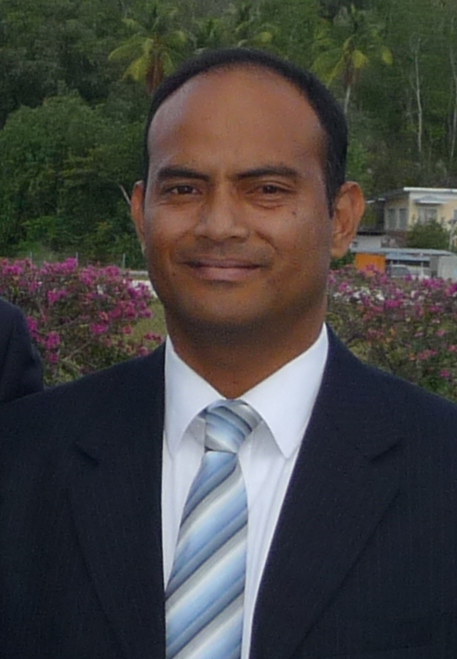
His Excellency David Adeang President of the Republic of Nauru Government Offices Yaren District, Nauru
Mr. President,
I am writing to you not as a citizen of any country.
But as a Thinking Observer of human systems, watching small nations that often remain outside the attention of the larger world — yet contain some of the most concentrated forms of human reality.
Today my observation is focused on Nauru.
• Population: ~10,000–11,000 people
• Area: ~21 km² (roughly the size of a small city district)
• Island nation in the central Pacific Ocean
Nauru is not a country that can be understood through scale.
It is a country that must be understood through concentration.
A single island, a single society, a single administrative structure — compressed into one of the smallest sovereign territories on Earth.
There is no geographic distance between “regions” here.
There is only proximity — physical, social, and institutional.
From an external analytical perspective, Nauru functions almost like a “closed-loop society,” where most systems — governance, services, daily life — exist within one tightly bounded space.
Mr. President,
One of the most striking questions about Nauru is not political.
It is existential and practical:
What do people actually do in daily life inside such a small territorial system?
The answer is structured, not mysterious.
Employment is heavily centered around the state.
Public administration, education, healthcare, and utilities form the backbone of the job market.
There is also legacy economic activity linked to phosphate extraction, which historically shaped the country’s development trajectory.
In addition, external partnerships and regional agreements play a significant role in sustaining fiscal stability.
A notable external component has been the regional processing arrangement with Australia, which has contributed economically while also shaping public debate and external perception.
Mr. President,
Education exists within Nauru, but in a limited internal cycle.
There are schools on the island, but higher education typically requires studying abroad.
This creates a structural pattern: basic education is local, advanced education is external.
Healthcare follows a similar structure.
Basic medical services exist domestically, but serious or complex cases often require evacuation to larger regional systems such as Australia or New Zealand.
This creates a dependency model that is not unusual for microstates, but highly visible in daily governance.
Commercial life is also highly compact.
There are local shops and essential goods distribution systems, but no large-scale retail ecosystems or commercial centers comparable to metropolitan countries.
Most goods are imported.
The economy is therefore not production-driven in the classical sense, but import-and-distribution based.
Mr. President,
One of the most important analytical questions is not what institutions exist, but how people experience daily life.
In Nauru, daily life is shaped by proximity to the sea, family structures, community interaction, and limited spatial variation.
There are no long commutes.
No regional migration inside the country.
No urban-rural divide in the traditional sense.
Instead, life is socially dense rather than geographically complex.
Leisure and recreation are correspondingly simple but socially important:
sports (especially football and weightlifting)
fishing
family gatherings
church-based community life
walking and informal social interaction along the coastline
television and internet-based entertainment
There are no cinemas or large entertainment complexes.
But there is a strong emphasis on interpersonal and community-based social life.
Mr. President,
From a systems perspective, Nauru raises a fundamental question:
What does “development” mean when a country is already spatially complete?
There is no internal expansion space.
No regional frontier.
No urban sprawl.
Only intensification or external connection.
Therefore, the central national dynamic becomes not expansion, but balance:
between external dependency and internal cohesion.
between limited economic structure and social stability.
between global integration and local sufficiency.
Respectfully,
A Thinking Observer of Human Systems
P.S. System-Level Audit of Nauru
• Stability and Security: 3.5 / 5
Small population and strong state centralization support internal stability, though institutional capacity is limited by scale.
• Economy and Standard of Living: 2.5 / 5
Highly dependent on government employment, imports, and external arrangements; limited diversification and production base.
• Social Well-Being: 4.0 / 5
Strong community cohesion and dense social structure, but constrained opportunities and high external dependency for services.
• Development and Future Prospects: 3.0 / 5
Future development is structurally limited by geography; progress depends on external partnerships and economic restructuring.
Final Score: 3.25 / 5 — A Fully Compressed Sovereign System
Nauru is not defined by expansion.
It is defined by the intensity of life inside a fully bounded space.
Русский перевод
Mr. President,
I am writing to you not as a citizen of any country.
But as a Thinking Observer of human systems, watching small nations that often remain outside the attention of the larger world — yet contain some of the most concentrated forms of human reality.
Today my observation is focused on Nauru.
• Population: ~10,000–11,000 people
• Area: ~21 km² (roughly the size of a small city district)
• Island nation in the central Pacific Ocean
Nauru is not a country that can be understood through scale.
It is a country that must be understood through concentration.
A single island, a single society, a single administrative structure — compressed into one of the smallest sovereign territories on Earth.
There is no geographic distance between “regions” here.
There is only proximity — physical, social, and institutional.
From an external analytical perspective, Nauru functions almost like a “closed-loop society,” where most systems — governance, services, daily life — exist within one tightly bounded space.
Mr. President,
One of the most striking questions about Nauru is not political.
It is existential and practical:
What do people actually do in daily life inside such a small territorial system?
The answer is structured, not mysterious.
Employment is heavily centered around the state.
Public administration, education, healthcare, and utilities form the backbone of the job market.
There is also legacy economic activity linked to phosphate extraction, which historically shaped the country’s development trajectory.
In addition, external partnerships and regional agreements play a significant role in sustaining fiscal stability.
A notable external component has been the regional processing arrangement with Australia, which has contributed economically while also shaping public debate and external perception.
Mr. President,
Education exists within Nauru, but in a limited internal cycle.
There are schools on the island, but higher education typically requires studying abroad.
This creates a structural pattern: basic education is local, advanced education is external.
Healthcare follows a similar structure.
Basic medical services exist domestically, but serious or complex cases often require evacuation to larger regional systems such as Australia or New Zealand.
This creates a dependency model that is not unusual for microstates, but highly visible in daily governance.
Commercial life is also highly compact.
There are local shops and essential goods distribution systems, but no large-scale retail ecosystems or commercial centers comparable to metropolitan countries.
Most goods are imported.
The economy is therefore not production-driven in the classical sense, but import-and-distribution based.
Mr. President,
One of the most important analytical questions is not what institutions exist, but how people experience daily life.
In Nauru, daily life is shaped by proximity to the sea, family structures, community interaction, and limited spatial variation.
There are no long commutes.
No regional migration inside the country.
No urban-rural divide in the traditional sense.
Instead, life is socially dense rather than geographically complex.
Leisure and recreation are correspondingly simple but socially important:
sports (especially football and weightlifting)
fishing
family gatherings
church-based community life
walking and informal social interaction along the coastline
television and internet-based entertainment
There are no cinemas or large entertainment complexes.
But there is a strong emphasis on interpersonal and community-based social life.
Mr. President,
From a systems perspective, Nauru raises a fundamental question:
What does “development” mean when a country is already spatially complete?
There is no internal expansion space.
No regional frontier.
No urban sprawl.
Only intensification or external connection.
Therefore, the central national dynamic becomes not expansion, but balance:
between external dependency and internal cohesion.
between limited economic structure and social stability.
between global integration and local sufficiency.
Respectfully,
A Thinking Observer of Human Systems
P.S. System-Level Audit of Nauru
• Stability and Security: 3.5 / 5
Small population and strong state centralization support internal stability, though institutional capacity is limited by scale.
• Economy and Standard of Living: 2.5 / 5
Highly dependent on government employment, imports, and external arrangements; limited diversification and production base.
• Social Well-Being: 4.0 / 5
Strong community cohesion and dense social structure, but constrained opportunities and high external dependency for services.
• Development and Future Prospects: 3.0 / 5
Future development is structurally limited by geography; progress depends on external partnerships and economic restructuring.
Final Score: 3.25 / 5 — A Fully Compressed Sovereign System
Nauru is not defined by expansion.
It is defined by the intensity of life inside a fully bounded space.
Русский перевод
Reader response
Report
Share URL: https://lettertoleader.com/en/nauru/president/140-open-letter-to-the-president-of-nauru