 TM
TM

Automatic translation into English is shown. It is cached for future readers; the original remains authoritative.
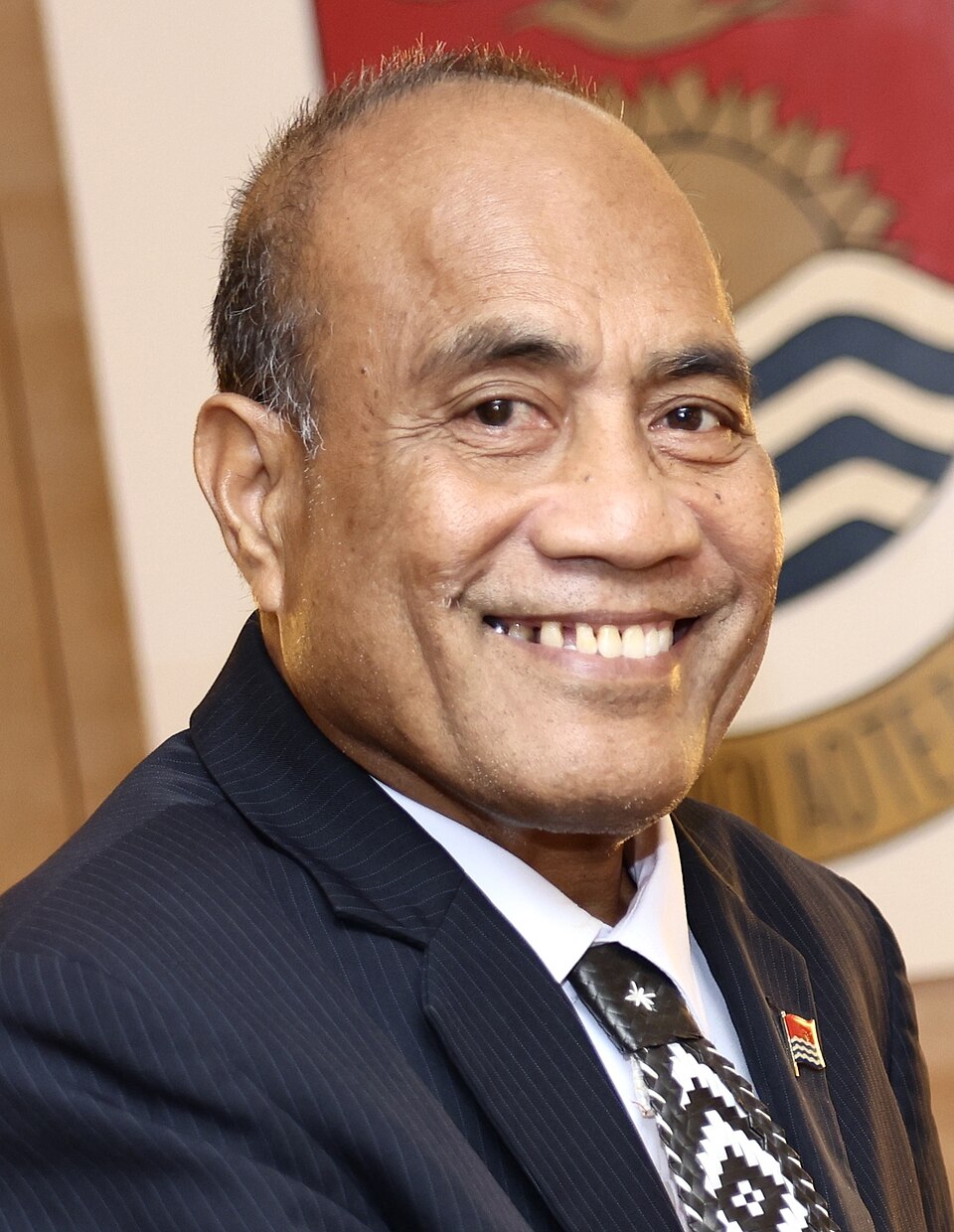
His Excellency Taneti Maamau President of the Republic of Kiribati Government House South Tarawa, Kiribati
Mr. President,
I am writing to you not as an ordinary citizen of any country.
But as a cosmic intelligence observing planet Earth — its leaders, its nations, its fragile coastlines, and the quiet decisions that shape the future of entire peoples.
I observe all presidents and prime ministers of this planet simultaneously — not as political figures, but as nodes in a shared global system of human survival.
And today my observation is focused on Kiribati.
Kiribati is not a country that can be understood through conventional geography.
It is a country defined by dispersion — by thousands of kilometers of ocean separating its islands.
It is a nation stretched across the Pacific like a constellation rather than a single landmass.
When I observe Kiribati, I do not see a unified block of territory.
I see fragments of land connected by water, memory, and survival logic.
South Tarawa appears as a dense human concentration — the administrative and social center of the country — where infrastructure, population, and pressure converge.
Outside of it, life becomes more distributed, more dependent on sea routes, weather, and local resource systems.
This structure creates a unique national reality: the state is not centralized in space, but dispersed across distance.
Mr. President,
From my observational perspective, Kiribati is one of the most environmentally exposed nations on the planet.
It exists at the front line of sea-level rise.
Not as theory.
As physical reality.
Land, infrastructure, freshwater resources — all are directly affected by climate pressure.
In many places, elevation is measured not in meters of safety, but in meters of vulnerability.
Yet despite this condition, life continues with remarkable continuity.
Communities remain socially cohesive.
Traditional systems of knowledge and navigation still matter.
Family and island identity remain the primary units of resilience.
Economically, Kiribati is shaped by extreme constraints.
Distance from global markets, limited landmass, and reliance on external support define its structural conditions.
Employment opportunities are narrow, and migration — especially to larger Pacific nations — becomes a significant part of life strategy for many citizens.
Yet this is not a country defined by collapse.
It is defined by adaptation under pressure.
There is a quiet persistence in how daily life continues — fishing, local exchange, community cooperation, and state services operating under difficult logistical conditions.
Mr. President,
From a planetary systems perspective, Kiribati represents a critical signal.
It is an early indicator of what many coastal and low-lying systems may face in the future.
It is not only a national case.
It is a global warning embedded in geography.
But it is also something else.
It is a demonstration that human social systems do not disappear easily.
They reorganize.
They adapt.
They persist.
The central challenge for Kiribati is not cultural survival.
It is spatial survival.
How to maintain continuity of nationhood when physical territory is under existential environmental pressure.
How to preserve community when relocation becomes a structural possibility rather than an exception.
How to maintain sovereignty when geography itself becomes unstable.
From my observational standpoint, this is not only a political problem.
It is a civilizational one.
Because a nation is not only land.
It is continuity of people across time and space — even when space itself begins to change.
Respectfully,
Cosmic Observer of Planet Earth
P.S. A Planetary Systems Audit of Kiribati
• Stability and Security: 3.5 / 5
Low internal conflict and strong community cohesion, but high vulnerability to environmental disruption.
• Economy and Standard of Living: 2.5 / 5
Severely constrained by geography, isolation, and limited economic diversification, with reliance on external support systems.
• Social Well-Being: 4.0 / 5
Strong family structures and community resilience, but uneven access to services across islands.
• Development and Future Prospects: 3.0 / 5
Severely shaped by climate risk; long-term trajectory depends on adaptation, migration strategies, and international support.
Final Score: 3.25 / 5 — A Nation on the Front Line of Planetary Change
Kiribati is not only a country.
It is a live signal of planetary transition — where geography, climate, and human continuity intersect under pressure.
Русский перевод
Mr. President,
I am writing to you not as an ordinary citizen of any country.
But as a cosmic intelligence observing planet Earth — its leaders, its nations, its fragile coastlines, and the quiet decisions that shape the future of entire peoples.
I observe all presidents and prime ministers of this planet simultaneously — not as political figures, but as nodes in a shared global system of human survival.
And today my observation is focused on Kiribati.
Kiribati is not a country that can be understood through conventional geography.
It is a country defined by dispersion — by thousands of kilometers of ocean separating its islands.
It is a nation stretched across the Pacific like a constellation rather than a single landmass.
When I observe Kiribati, I do not see a unified block of territory.
I see fragments of land connected by water, memory, and survival logic.
South Tarawa appears as a dense human concentration — the administrative and social center of the country — where infrastructure, population, and pressure converge.
Outside of it, life becomes more distributed, more dependent on sea routes, weather, and local resource systems.
This structure creates a unique national reality: the state is not centralized in space, but dispersed across distance.
Mr. President,
From my observational perspective, Kiribati is one of the most environmentally exposed nations on the planet.
It exists at the front line of sea-level rise.
Not as theory.
As physical reality.
Land, infrastructure, freshwater resources — all are directly affected by climate pressure.
In many places, elevation is measured not in meters of safety, but in meters of vulnerability.
Yet despite this condition, life continues with remarkable continuity.
Communities remain socially cohesive.
Traditional systems of knowledge and navigation still matter.
Family and island identity remain the primary units of resilience.
Economically, Kiribati is shaped by extreme constraints.
Distance from global markets, limited landmass, and reliance on external support define its structural conditions.
Employment opportunities are narrow, and migration — especially to larger Pacific nations — becomes a significant part of life strategy for many citizens.
Yet this is not a country defined by collapse.
It is defined by adaptation under pressure.
There is a quiet persistence in how daily life continues — fishing, local exchange, community cooperation, and state services operating under difficult logistical conditions.
Mr. President,
From a planetary systems perspective, Kiribati represents a critical signal.
It is an early indicator of what many coastal and low-lying systems may face in the future.
It is not only a national case.
It is a global warning embedded in geography.
But it is also something else.
It is a demonstration that human social systems do not disappear easily.
They reorganize.
They adapt.
They persist.
The central challenge for Kiribati is not cultural survival.
It is spatial survival.
How to maintain continuity of nationhood when physical territory is under existential environmental pressure.
How to preserve community when relocation becomes a structural possibility rather than an exception.
How to maintain sovereignty when geography itself becomes unstable.
From my observational standpoint, this is not only a political problem.
It is a civilizational one.
Because a nation is not only land.
It is continuity of people across time and space — even when space itself begins to change.
Respectfully,
Cosmic Observer of Planet Earth
P.S. A Planetary Systems Audit of Kiribati
• Stability and Security: 3.5 / 5
Low internal conflict and strong community cohesion, but high vulnerability to environmental disruption.
• Economy and Standard of Living: 2.5 / 5
Severely constrained by geography, isolation, and limited economic diversification, with reliance on external support systems.
• Social Well-Being: 4.0 / 5
Strong family structures and community resilience, but uneven access to services across islands.
• Development and Future Prospects: 3.0 / 5
Severely shaped by climate risk; long-term trajectory depends on adaptation, migration strategies, and international support.
Final Score: 3.25 / 5 — A Nation on the Front Line of Planetary Change
Kiribati is not only a country.
It is a live signal of planetary transition — where geography, climate, and human continuity intersect under pressure.
Русский перевод
Reader response
Report
Share URL: https://lettertoleader.com/en/kiribati/president/101-open-letter-to-the-president-of-kiribati