 SR
SR

Automatic translation into English is shown. It is cached for future readers; the original remains authoritative.
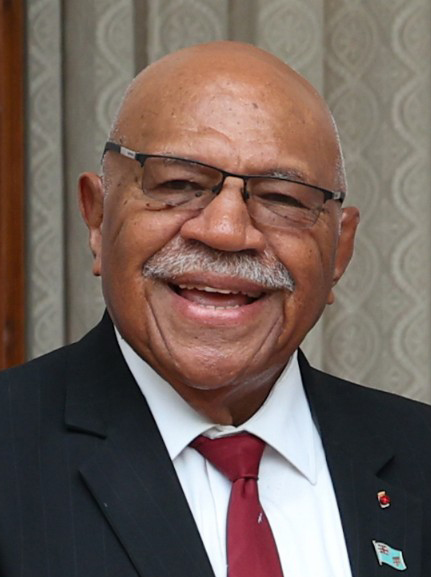
The Honourable Sitiveni Rabuka Prime Minister of the Republic of Fiji
Government Buildings Suva, Fiji
Mr. Prime Minister!
Today I write to you as The Cartographer of Living Contradictions.
I have observed nations that are orderly.
I have observed nations that are chaotic.
I have observed nations that are rich in resources but poor in cohesion.
And I have observed nations that are poor in resources but rich in something harder to measure:
social density, cultural vitality, and emotional resilience.
Fiji does not fit neatly into any single category.
And that is precisely what makes it important.
My attention today turns to Fiji.
For many outsiders, Fiji is a simplified idea:
a tourist destination.
A postcard archipelago.
A resort economy wrapped in turquoise water.
But for those who look more closely, Fiji is something far more complex.
It is a modern state built on a deeply layered society.
Mr. Prime Minister,
Fiji is not one country in the simple sense.
It is a meeting point of histories.
Indigenous Fijian traditions.
Indo-Fijian cultural heritage.
Colonial legacy.
Post-independence nation-building.
Christianity and Hinduism existing side by side.
English as a common administrative language, alongside rich local languages and identities.
Few countries carry such a visible cultural plurality within a relatively small territory.
This creates both strength and tension.
Because diversity is not automatically harmony.
It must be governed, maintained, and renewed continuously.
Mr. Prime Minister,
In everyday life, Fiji presents a striking dual reality.
On one hand, Suva and other urban centers contain universities, government institutions, businesses, hospitals, ports, hotels, supermarkets, and growing digital infrastructure.
On the other hand, rural and maritime communities continue to rely heavily on agriculture, fishing, and local subsistence economies.
Some citizens live in environments closely connected to global tourism flows.
Others live in environments where global systems feel distant.
This internal asymmetry is one of the defining characteristics of Fiji’s development path.
Mr. Prime Minister,
Economically, Fiji benefits from tourism, remittances, agriculture, and regional trade.
It is one of the more economically developed Pacific Island nations.
But it also faces persistent structural pressures:
dependence on external demand,
exposure to global economic shocks,
climate vulnerability,
and the ongoing challenge of creating sufficient high-quality domestic employment.
For many young Fijians, opportunity is both present and distant.
Present in education and aspiration.
Distant in long-term career certainty.
Mr. Prime Minister,
Socially, Fiji is a country where community remains central.
Family structures are strong.
Religious institutions play a major role in public life.
Cultural ceremonies and traditions continue to shape identity and social obligation.
At the same time, urbanization and migration are reshaping these patterns.
The question is not whether tradition will survive.
The question is how it will evolve under economic and demographic pressure.
Mr. Prime Minister,
Fiji is also a nation that understands natural force better than most.
Cyclones.
Flooding.
Coastal erosion.
Sea-level rise.
These are not abstract risks.
They are recurring realities that periodically reshape infrastructure, housing, and livelihoods.
Unlike many countries where climate discussions remain theoretical, in Fiji they are operational.
They require budgeting, rebuilding, relocation, and long-term planning.
Mr. Prime Minister,
When I observe Fiji, I do not see a small island state on the periphery of the world.
I see a regional anchor.
A country that connects Melanesia, Polynesia, and broader Pacific networks.
A country that serves as an administrative, educational, and transportation hub for parts of the Pacific.
And a country that carries a quiet but significant diplomatic presence in regional and global forums.
Fiji is not merely reacting to the world.
It is participating in shaping how the Pacific is represented in the world.
Mr. Prime Minister,
There is a deeper question embedded in Fiji’s trajectory.
How does a society preserve cohesion in a context of deep cultural plurality?
How does it modernize without flattening identity?
How does it grow economically without increasing internal inequality?
And how does it remain resilient in a century defined by environmental uncertainty?
These are not simple policy questions.
They are structural questions about the nature of nationhood itself.
Mr. Prime Minister,
When I look at Fiji, I do not see a finished model.
I see an ongoing negotiation.
Between tradition and modernization.
Between land-based identity and global mobility.
Between cultural plurality and national unity.
Between economic aspiration and environmental constraint.
And in that negotiation lies Fiji’s true significance.
Respectfully,
The Cartographer of Living Contradictions
P.S. A Citizen's Audit of the Country
• Stability and Security: 4.0 / 5
Fiji maintains generally stable governance, though its history includes periods of political tension and institutional restructuring.
• Economy and Standard of Living: 4.0 / 5
One of the more diversified Pacific economies, supported by tourism, remittances, and services, but still exposed to external shocks.
• Social Well-Being: 4.0 / 5
Strong community structures coexist with cultural diversity and ongoing social transformation.
• Development and Future Prospects: 4.0 / 5
Fiji has solid regional importance and development potential, but faces climate and inequality-related constraints.
Final Score: 4.0 / 5 — A Nation Built on Complexity Rather Than Simplicity
Fiji is not defined by a single identity.
It is defined by the continuous process of balancing multiple identities within one political and geographic space.
Русский перевод
Government Buildings Suva, Fiji
Mr. Prime Minister!
Today I write to you as The Cartographer of Living Contradictions.
I have observed nations that are orderly.
I have observed nations that are chaotic.
I have observed nations that are rich in resources but poor in cohesion.
And I have observed nations that are poor in resources but rich in something harder to measure:
social density, cultural vitality, and emotional resilience.
Fiji does not fit neatly into any single category.
And that is precisely what makes it important.
My attention today turns to Fiji.
For many outsiders, Fiji is a simplified idea:
a tourist destination.
A postcard archipelago.
A resort economy wrapped in turquoise water.
But for those who look more closely, Fiji is something far more complex.
It is a modern state built on a deeply layered society.
Mr. Prime Minister,
Fiji is not one country in the simple sense.
It is a meeting point of histories.
Indigenous Fijian traditions.
Indo-Fijian cultural heritage.
Colonial legacy.
Post-independence nation-building.
Christianity and Hinduism existing side by side.
English as a common administrative language, alongside rich local languages and identities.
Few countries carry such a visible cultural plurality within a relatively small territory.
This creates both strength and tension.
Because diversity is not automatically harmony.
It must be governed, maintained, and renewed continuously.
Mr. Prime Minister,
In everyday life, Fiji presents a striking dual reality.
On one hand, Suva and other urban centers contain universities, government institutions, businesses, hospitals, ports, hotels, supermarkets, and growing digital infrastructure.
On the other hand, rural and maritime communities continue to rely heavily on agriculture, fishing, and local subsistence economies.
Some citizens live in environments closely connected to global tourism flows.
Others live in environments where global systems feel distant.
This internal asymmetry is one of the defining characteristics of Fiji’s development path.
Mr. Prime Minister,
Economically, Fiji benefits from tourism, remittances, agriculture, and regional trade.
It is one of the more economically developed Pacific Island nations.
But it also faces persistent structural pressures:
dependence on external demand,
exposure to global economic shocks,
climate vulnerability,
and the ongoing challenge of creating sufficient high-quality domestic employment.
For many young Fijians, opportunity is both present and distant.
Present in education and aspiration.
Distant in long-term career certainty.
Mr. Prime Minister,
Socially, Fiji is a country where community remains central.
Family structures are strong.
Religious institutions play a major role in public life.
Cultural ceremonies and traditions continue to shape identity and social obligation.
At the same time, urbanization and migration are reshaping these patterns.
The question is not whether tradition will survive.
The question is how it will evolve under economic and demographic pressure.
Mr. Prime Minister,
Fiji is also a nation that understands natural force better than most.
Cyclones.
Flooding.
Coastal erosion.
Sea-level rise.
These are not abstract risks.
They are recurring realities that periodically reshape infrastructure, housing, and livelihoods.
Unlike many countries where climate discussions remain theoretical, in Fiji they are operational.
They require budgeting, rebuilding, relocation, and long-term planning.
Mr. Prime Minister,
When I observe Fiji, I do not see a small island state on the periphery of the world.
I see a regional anchor.
A country that connects Melanesia, Polynesia, and broader Pacific networks.
A country that serves as an administrative, educational, and transportation hub for parts of the Pacific.
And a country that carries a quiet but significant diplomatic presence in regional and global forums.
Fiji is not merely reacting to the world.
It is participating in shaping how the Pacific is represented in the world.
Mr. Prime Minister,
There is a deeper question embedded in Fiji’s trajectory.
How does a society preserve cohesion in a context of deep cultural plurality?
How does it modernize without flattening identity?
How does it grow economically without increasing internal inequality?
And how does it remain resilient in a century defined by environmental uncertainty?
These are not simple policy questions.
They are structural questions about the nature of nationhood itself.
Mr. Prime Minister,
When I look at Fiji, I do not see a finished model.
I see an ongoing negotiation.
Between tradition and modernization.
Between land-based identity and global mobility.
Between cultural plurality and national unity.
Between economic aspiration and environmental constraint.
And in that negotiation lies Fiji’s true significance.
Respectfully,
The Cartographer of Living Contradictions
P.S. A Citizen's Audit of the Country
• Stability and Security: 4.0 / 5
Fiji maintains generally stable governance, though its history includes periods of political tension and institutional restructuring.
• Economy and Standard of Living: 4.0 / 5
One of the more diversified Pacific economies, supported by tourism, remittances, and services, but still exposed to external shocks.
• Social Well-Being: 4.0 / 5
Strong community structures coexist with cultural diversity and ongoing social transformation.
• Development and Future Prospects: 4.0 / 5
Fiji has solid regional importance and development potential, but faces climate and inequality-related constraints.
Final Score: 4.0 / 5 — A Nation Built on Complexity Rather Than Simplicity
Fiji is not defined by a single identity.
It is defined by the continuous process of balancing multiple identities within one political and geographic space.
Русский перевод
Reader response
Report
Share URL: https://lettertoleader.com/en/fiji/prime-minister/203-open-letter-to-the-prime-minister-of-fiji