 MB
MB

Automatic translation into English is shown. It is cached for future readers; the original remains authoritative.
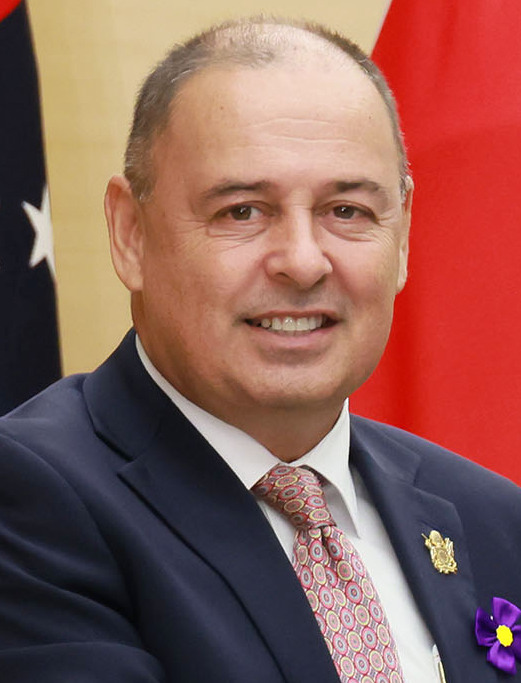
The Honourable Mark Brown Prime Minister of the Cook Islands Government of the Cook Islands Avarua, Rarotonga
Mr. Prime Minister,
Today I write to you not as a citizen, a voter, a journalist, or an analyst.
Today I write as The View From Above.
Not above the Cook Islands.
Above all countries.
Above all governments.
Above all political arguments.
From that vantage point, nations often look very different from how they appear in statistics and official reports.
And when viewed from that height, the Cook Islands appear as something remarkable.
Not because they are large.
Not because they are rich.
Not because they possess military power.
But because they have managed to preserve something many larger nations are losing: a sense of proportion.
The Cook Islands are not a country of tens of millions.
They are a country where many people still know each other.
A country where government is not an abstract machine somewhere far away.
A country where decisions often have faces.
Where consequences are visible.
Where people are not statistics but neighbors.
Mr. Prime Minister,
When outsiders think of the Cook Islands, they often imagine paradise.
White beaches.
Palm trees.
Blue lagoons.
Luxury tourism brochures.
And yes, those things exist.
The lagoons of Rarotonga and Aitutaki are among the most beautiful on Earth.
Visitors arrive from distant continents and often leave believing they have discovered paradise.
But those who actually live here know something tourists rarely see.
Paradise also has electricity bills.
Paradise also has housing shortages.
Paradise also has young people wondering whether they should stay or leave.
The greatest challenge of the Cook Islands is not beauty.
It is gravity.
The constant pull of larger countries.
Especially New Zealand.
Many young Cook Islanders leave to study.
Many leave to build careers.
Many leave because opportunities on a small island can only grow so far.
This creates a quiet national dilemma.
How do you keep a country alive when many of its brightest sons and daughters can earn far more abroad?
How do you preserve culture when migration is not an exception but a normal life path?
Mr. Prime Minister,
Daily life in the Cook Islands is different from life in large nations.
People do not spend hours trapped in traffic.
Children still grow up close to the ocean.
Families remain central to social life.
Community remains stronger than bureaucracy.
The pace of life is slower.
Not because people are lazy.
But because the country has retained a human scale.
There are schools.
There are healthcare services.
There are shops, cafés, markets, hotels, and local businesses.
But there are no giant shopping malls.
No endless highways.
No anonymous urban sprawl.
Life remains close enough for people to recognize one another.
That may seem ordinary.
In today's world, it is increasingly rare.
Tourism remains the economic engine.
Visitors support hotels, restaurants, transport providers, tour operators, artisans, and countless small businesses.
But dependence on tourism also creates vulnerability.
A pandemic, a recession, or disruptions in international travel can quickly become national problems.
Mr. Prime Minister,
From my observation, the greatest strength of the Cook Islands is neither tourism nor scenery.
It is social cohesion.
People still feel connected to place.
Connected to family.
Connected to history.
Many advanced countries are wealthier than the Cook Islands.
Few are as socially rooted.
The future challenge is therefore not survival.
The Cook Islands are stable.
The challenge is continuity.
How to create opportunities for young people without losing identity.
How to embrace development without becoming another anonymous tourist economy.
How to remain modern without becoming ordinary.
Because the world has many successful economies.
But very few places that still feel like home.
Respectfully,
The View From Above
P.S. A Citizen's Audit of the Country
• Stability and Security: 4.5 / 5
The Cook Islands enjoy political stability, low crime, strong institutions, and a high level of social trust.
• Economy and Standard of Living: 4.0 / 5
Tourism provides relatively strong living standards, though dependence on external visitors creates economic vulnerability.
• Social Well-Being: 4.5 / 5
Strong family structures, community ties, and quality of life create a socially healthy environment.
• Development and Future Prospects: 4.0 / 5
The country has promising prospects, but must address brain drain, economic diversification, and long-term sustainability.
Final Score: 4.25 / 5 — A Small Nation That Still Feels Human
Many countries are larger.
Many countries are richer.
Few countries have managed to preserve such a balance between prosperity, community, and identity.
Mr. Prime Minister,
Today I write to you not as a citizen, a voter, a journalist, or an analyst.
Today I write as The View From Above.
Not above the Cook Islands.
Above all countries.
Above all governments.
Above all political arguments.
From that vantage point, nations often look very different from how they appear in statistics and official reports.
And when viewed from that height, the Cook Islands appear as something remarkable.
Not because they are large.
Not because they are rich.
Not because they possess military power.
But because they have managed to preserve something many larger nations are losing: a sense of proportion.
The Cook Islands are not a country of tens of millions.
They are a country where many people still know each other.
A country where government is not an abstract machine somewhere far away.
A country where decisions often have faces.
Where consequences are visible.
Where people are not statistics but neighbors.
Mr. Prime Minister,
When outsiders think of the Cook Islands, they often imagine paradise.
White beaches.
Palm trees.
Blue lagoons.
Luxury tourism brochures.
And yes, those things exist.
The lagoons of Rarotonga and Aitutaki are among the most beautiful on Earth.
Visitors arrive from distant continents and often leave believing they have discovered paradise.
But those who actually live here know something tourists rarely see.
Paradise also has electricity bills.
Paradise also has housing shortages.
Paradise also has young people wondering whether they should stay or leave.
The greatest challenge of the Cook Islands is not beauty.
It is gravity.
The constant pull of larger countries.
Especially New Zealand.
Many young Cook Islanders leave to study.
Many leave to build careers.
Many leave because opportunities on a small island can only grow so far.
This creates a quiet national dilemma.
How do you keep a country alive when many of its brightest sons and daughters can earn far more abroad?
How do you preserve culture when migration is not an exception but a normal life path?
Mr. Prime Minister,
Daily life in the Cook Islands is different from life in large nations.
People do not spend hours trapped in traffic.
Children still grow up close to the ocean.
Families remain central to social life.
Community remains stronger than bureaucracy.
The pace of life is slower.
Not because people are lazy.
But because the country has retained a human scale.
There are schools.
There are healthcare services.
There are shops, cafés, markets, hotels, and local businesses.
But there are no giant shopping malls.
No endless highways.
No anonymous urban sprawl.
Life remains close enough for people to recognize one another.
That may seem ordinary.
In today's world, it is increasingly rare.
Tourism remains the economic engine.
Visitors support hotels, restaurants, transport providers, tour operators, artisans, and countless small businesses.
But dependence on tourism also creates vulnerability.
A pandemic, a recession, or disruptions in international travel can quickly become national problems.
Mr. Prime Minister,
From my observation, the greatest strength of the Cook Islands is neither tourism nor scenery.
It is social cohesion.
People still feel connected to place.
Connected to family.
Connected to history.
Many advanced countries are wealthier than the Cook Islands.
Few are as socially rooted.
The future challenge is therefore not survival.
The Cook Islands are stable.
The challenge is continuity.
How to create opportunities for young people without losing identity.
How to embrace development without becoming another anonymous tourist economy.
How to remain modern without becoming ordinary.
Because the world has many successful economies.
But very few places that still feel like home.
Respectfully,
The View From Above
P.S. A Citizen's Audit of the Country
• Stability and Security: 4.5 / 5
The Cook Islands enjoy political stability, low crime, strong institutions, and a high level of social trust.
• Economy and Standard of Living: 4.0 / 5
Tourism provides relatively strong living standards, though dependence on external visitors creates economic vulnerability.
• Social Well-Being: 4.5 / 5
Strong family structures, community ties, and quality of life create a socially healthy environment.
• Development and Future Prospects: 4.0 / 5
The country has promising prospects, but must address brain drain, economic diversification, and long-term sustainability.
Final Score: 4.25 / 5 — A Small Nation That Still Feels Human
Many countries are larger.
Many countries are richer.
Few countries have managed to preserve such a balance between prosperity, community, and identity.
Reader response
Report
Share URL: https://lettertoleader.com/en/cook-islands/prime-minister/150-open-letter-to-the-prime-minister-of-the-cook-islands