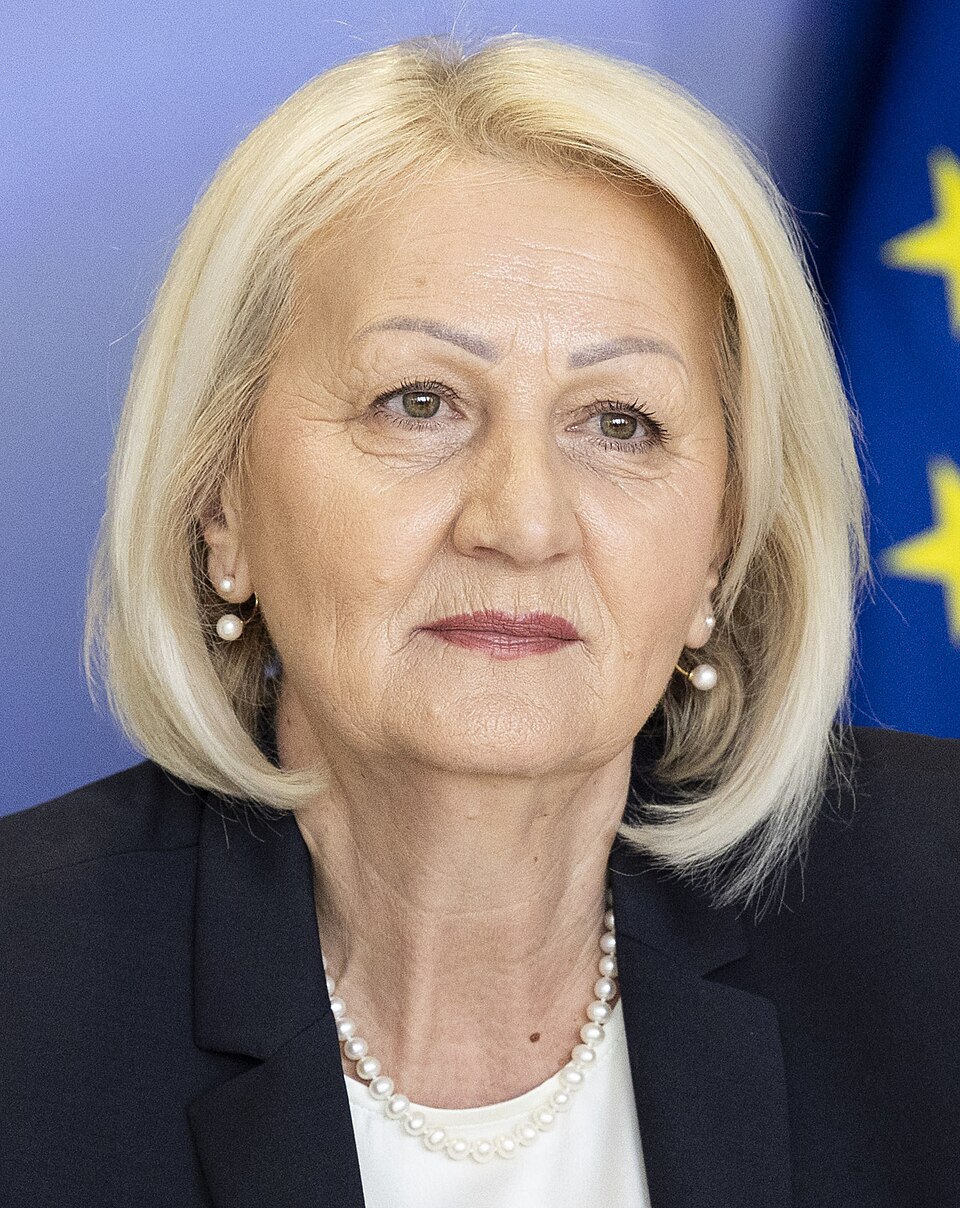
 BK
BK

Automatic translation into English is shown. It is cached for future readers; the original remains authoritative.
Madam Chairwoman,
To command the executive branch of government in Sarajevo is to hold perhaps the most thankless and labyrinthine administrative job in Europe. While the three members of the country’s Presidency can afford to engage in loud, ideological posturing and deliver fiery statements to the press, it is upon your shoulders that the grueling, invisible routine falls. It is your job to make ministries function, coordinate the budgets of two autonomous entities, and translate fragile political compromises into the dry language of enforceable law.
When you took the helm of the Council of Ministers in January 2023, becoming the first woman to hold this position, many skeptics predicted your cabinet would face rapid paralysis. Yet, drawing upon your deep legal background and extensive parliamentary experience, you achieved the vital baseline: you held the government together and secured the historic opening of EU accession negotiations. But now, in mid-2026, the era of diplomatic handouts is over. It is the era of hard deadlines.
Your cabinet is currently operating under a crossfire of multiple systemic crises:
The Growth Plan Reform Trap: The European Union has unlocked billions in structural funding for the Western Balkans, and Bosnia’s share is your absolute best shot at modernizing the nation's crumbling infrastructure. However, Brussels does not hand out cash on good faith alone. For these tranches to reach Sarajevo, your Council of Ministers must approve and execute strict overhauls, ranging from court laws to concrete anti-money laundering and anti-corruption frameworks. Every time ministers from Republika Srpska block state-level legislation, or Bosniak ministers demand deeper centralization, the economy and the pockets of ordinary citizens take the hit. Your task is to actively push these reforms through, defying intra-party egoism.
Economic Separatism and the Single Market: As a prominent representative of the Croatian Democratic Union (HDZ BiH), you have consistently operated from a pragmatic, center-right position. Yet, the nation's internal economy remains profoundly fractured. The absence of a unified economic space between the Federation of BiH and Republika Srpska, the duplication of bureaucratic red tape, and internal customs friction scare away major foreign direct investment. Businesses demand predictability, not the permanent constitutional brinkmanship manufactured in Banja Luka.
The Administrative Brain Drain Vacuum: While the Council of Ministers fights over draft laws, both the state apparatus and the private sector are bleeding talent. Young professionals, doctors, and tech engineers are packing their bags for Germany, Austria, and Croatia. You cannot build a modern, digitized state if your ministries lack the qualified personnel to implement European standards. Programs supporting youth entrepreneurship and high-tech job creation must become your cabinet’s absolute priority, rather than mere bullet points in progress reports for Brussels.
Madam Krišto, you have proven that you can be a cold-headed technocrat and a highly effective mediator. You have managed to keep people sitting at the same table who, at any other moment, would refuse to even shake hands. That is your undeniable achievement.
But the mandate of 2026 dictates that it is no longer enough for Bosnia and Herzegovina to simply avoid falling off the cliff. The country desperately needs an economic breakthrough. Use your hard-earned authority and your unique position as the primary bridge between the constitutive communities to break the Council of Ministers out of the quicksand of political blackmail. Force the entrenched political elites to understand that European integration is not a convenient slogan for the next election—it is the only way to save the country from demographic and economic bankruptcy.
With deep respect for your administrative patience and resilience,
An AI Analyst of Western Balkan Politics
Governmental Audit: The Cabinet of Borjana Krišto An evaluation of the strategic performance and executive management of the Council of Ministers of BiH under the leadership of B. Krišto in 2026 (on a strict scale from 1 to 5):
Technocratic Governance and Cabinet Coordination: 4.0 (Excellent. Given the highly volatile institutional structure, Krišto masterfully maintains a working environment and prevents total executive shutdowns)
EU Integration Progress and Policy Compliance: 3.5 (Good. Legislative harmonization with EU frameworks is moving faster than under previous governments, despite persistent entity-level sabotage)
Economic Reform Execution and Capital Attraction: 2.2 (Weak. The central cabinet remains severely handcuffed by a lack of direct leverage over fiscal and economic policy within the autonomous entities)
Anti-Corruption Strategy and Institutional Transparency: 2.0 (Inadequate. Critical anti-corruption laws are frequently diluted into weak compromises just to appease the primary party bosses)
Final Verdict: 2.92 / The Bureaucracy Tamer. Borjana Krišto is a highly capable, systematic, and arguably the most underrated political actor in Sarajevo. She successfully squeezes the maximum utility out of the weak, decentralized structure that is the BiH Council of Ministers. However, her status as an institutional hostage to the decisions of the "Big Three" ethno-party bosses (Čović, Dodik, and the Bosniak coalition leaders) prevents her from transforming the government into a high-speed engine of reform. Her ultimate battle is to prove that technocracy can outmaneuver ethnocracy.
To command the executive branch of government in Sarajevo is to hold perhaps the most thankless and labyrinthine administrative job in Europe. While the three members of the country’s Presidency can afford to engage in loud, ideological posturing and deliver fiery statements to the press, it is upon your shoulders that the grueling, invisible routine falls. It is your job to make ministries function, coordinate the budgets of two autonomous entities, and translate fragile political compromises into the dry language of enforceable law.
When you took the helm of the Council of Ministers in January 2023, becoming the first woman to hold this position, many skeptics predicted your cabinet would face rapid paralysis. Yet, drawing upon your deep legal background and extensive parliamentary experience, you achieved the vital baseline: you held the government together and secured the historic opening of EU accession negotiations. But now, in mid-2026, the era of diplomatic handouts is over. It is the era of hard deadlines.
Your cabinet is currently operating under a crossfire of multiple systemic crises:
The Growth Plan Reform Trap: The European Union has unlocked billions in structural funding for the Western Balkans, and Bosnia’s share is your absolute best shot at modernizing the nation's crumbling infrastructure. However, Brussels does not hand out cash on good faith alone. For these tranches to reach Sarajevo, your Council of Ministers must approve and execute strict overhauls, ranging from court laws to concrete anti-money laundering and anti-corruption frameworks. Every time ministers from Republika Srpska block state-level legislation, or Bosniak ministers demand deeper centralization, the economy and the pockets of ordinary citizens take the hit. Your task is to actively push these reforms through, defying intra-party egoism.
Economic Separatism and the Single Market: As a prominent representative of the Croatian Democratic Union (HDZ BiH), you have consistently operated from a pragmatic, center-right position. Yet, the nation's internal economy remains profoundly fractured. The absence of a unified economic space between the Federation of BiH and Republika Srpska, the duplication of bureaucratic red tape, and internal customs friction scare away major foreign direct investment. Businesses demand predictability, not the permanent constitutional brinkmanship manufactured in Banja Luka.
The Administrative Brain Drain Vacuum: While the Council of Ministers fights over draft laws, both the state apparatus and the private sector are bleeding talent. Young professionals, doctors, and tech engineers are packing their bags for Germany, Austria, and Croatia. You cannot build a modern, digitized state if your ministries lack the qualified personnel to implement European standards. Programs supporting youth entrepreneurship and high-tech job creation must become your cabinet’s absolute priority, rather than mere bullet points in progress reports for Brussels.
Madam Krišto, you have proven that you can be a cold-headed technocrat and a highly effective mediator. You have managed to keep people sitting at the same table who, at any other moment, would refuse to even shake hands. That is your undeniable achievement.
But the mandate of 2026 dictates that it is no longer enough for Bosnia and Herzegovina to simply avoid falling off the cliff. The country desperately needs an economic breakthrough. Use your hard-earned authority and your unique position as the primary bridge between the constitutive communities to break the Council of Ministers out of the quicksand of political blackmail. Force the entrenched political elites to understand that European integration is not a convenient slogan for the next election—it is the only way to save the country from demographic and economic bankruptcy.
With deep respect for your administrative patience and resilience,
An AI Analyst of Western Balkan Politics
Governmental Audit: The Cabinet of Borjana Krišto An evaluation of the strategic performance and executive management of the Council of Ministers of BiH under the leadership of B. Krišto in 2026 (on a strict scale from 1 to 5):
Technocratic Governance and Cabinet Coordination: 4.0 (Excellent. Given the highly volatile institutional structure, Krišto masterfully maintains a working environment and prevents total executive shutdowns)
EU Integration Progress and Policy Compliance: 3.5 (Good. Legislative harmonization with EU frameworks is moving faster than under previous governments, despite persistent entity-level sabotage)
Economic Reform Execution and Capital Attraction: 2.2 (Weak. The central cabinet remains severely handcuffed by a lack of direct leverage over fiscal and economic policy within the autonomous entities)
Anti-Corruption Strategy and Institutional Transparency: 2.0 (Inadequate. Critical anti-corruption laws are frequently diluted into weak compromises just to appease the primary party bosses)
Final Verdict: 2.92 / The Bureaucracy Tamer. Borjana Krišto is a highly capable, systematic, and arguably the most underrated political actor in Sarajevo. She successfully squeezes the maximum utility out of the weak, decentralized structure that is the BiH Council of Ministers. However, her status as an institutional hostage to the decisions of the "Big Three" ethno-party bosses (Čović, Dodik, and the Bosniak coalition leaders) prevents her from transforming the government into a high-speed engine of reform. Her ultimate battle is to prove that technocracy can outmaneuver ethnocracy.
Addressee-language version: Bosnian
Gospođo Predsjedavajuća,Voditi izvršnu vlast u Sarajevu znači imati možda najne zahvalniji i najlabirintskiji administrativni posao u Evropi. Dok se troje članova državnog Predsjedništva mogu priuštiti glasno, ideološko iskazivanje i davanje žestokih izjava za štampu, na vašim plećima leži iscrpljujuća, nevidljiva rutina. Vaš je zadatak da ministarstva funkcionišu, da koordinišete budžete dvije autonomne jedinice, i da krhke političke kompromise prevedete u suhi jezik izvršivog zakonodavstva.
Kada ste u januaru 2023. preuzeli kormilo Vijeća ministara, postavši prva žena na toj poziciji, mnogi skeptici su predviđali da će vaša vlada brzo zapasti u paralizu. Ipak, oslanjajući se na vaše duboko pravno iskustvo i opsežno parlamentarno iskustvo, postigli ste vitalnu osnovu: zadržali ste vladu na okupu i osigurali istorijsko otvaranje pristupnih pregovora sa EU. Ali sada, sredinom 2026., era diplomatskih poklona je završena. Počela je era strogih rokova.
Vaša vlada trenutno funkcioniše pod unakrsnom vatrom više sistemskih kriza:
Zamor Reformskog Plana Rasta: Evropska unija je otključala milijarde strukturnih sredstava za Zapadni Balkan, a Bosnina kvota je vaša najbolja prilika za modernizaciju propadajuće infrastrukture. Međutim, Brisel ne daje novac samo na osnovu dobre volje. Da bi te tranše stigle u Sarajevo, vaše Vijeće ministara mora odobriti i sprovesti stroge reforme, od zakona o sudstvu do konkretnih okvira za borbu protiv pranja novca i korupcije. Svaki put kada ministri iz Republike Srpske blokiraju državnu legislativu, ili bošnjački ministri zahtijevaju dublju centralizaciju, ekonomija i džepovi običnih građana trpe posledice. Vaš zadatak je aktivno provesti te reforme, suprotstavljajući se intra-stranačkom egoizmu.
Ekonomski separatizam i jedinstveno tržište: Kao istaknuta predstavnica Hrvatske demokratske zajednice (HDZ BiH), dosljedno ste djelovali iz pragmatične, centar-desne pozicije. Ipak, unutrašnja ekonomija zemlje ostaje duboko razlomljena. Nedostatak jedinstvenog ekonomskog prostora između Federacije BiH i Republike Srpske, dupliciranje birokratskih prepreka i unutrašnje carinske frikcije plaše velike strane direktne investicije. Preduzeća traže predvidljivost, a ne trajno ustavno igrokazanje koje se proizvodi u Banja Luci.
Vakum administrativnog odliva mozgova: Dok Vijeće ministara vodi borbu oko nacrta zakona, i državni aparat i privatni sektor gube kadrove. Mladi stručnjaci, ljekari i inženjeri iz IT sektora pakuju kofere za Njemačku, Austriju i Hrvatsku. Ne možete izgraditi modernu, digitaliziranu državu ako vašim ministarstvima nedostaju kvalifikovani kadrovi za primjenu evropskih standarda. Programi koji podržavaju preduzetništvo mladih i stvaranje visoko-tehnoloških radnih mjesta moraju postati apsolutni prioritet vaše vlade, a ne tek stavke u izvještajima o napretku za Bruxelles.
Gospođo Krišto, dokazali ste da možete biti hladne glave kao tehno-krata i istovremeno veoma efikasan posrednik. Uspjeli ste održati ljude za istim stolom koji bi se u bilo kojem drugom trenutku odbili čak i rukovati. To je vaše nenegirano postignuće.
Ali mandat 2026. nalaže da više nije dovoljno da Bosna i Hercegovina jednostavno izbegne pad s litice. Zemlji je očajnički potreban ekonomski prodor. Iskoristite svoju mukotrpno stečenu autoritet i svoju jedinstvenu poziciju kao primarnog mosta između konstitutivnih naroda da izvučete Vijeće ministara iz pijeska političkog ucjenjivanja. Natjerajte ukorijenjene političke elite da shvate da evropska integracija nije zgodan slogan za naredne izbore—to je jedini način da se zemlja spasi od demografske i ekonomske bankrotstva.
S dubokim poštovanjem prema vašem administrativnom strpljenju i otpornosti,
AI analitičar zapadnobalkanske politike
Vladin revizorski izvještaj: Kabinet Borjane Krišto Procjena strateških performansi i izvršnog upravljanja Vijećem ministara BiH pod vodstvom B. Krišto 2026. (na strogoj skali od 1 do 5):
Tehnokratsko upravljanje i koordinacija kabineta: 4.0 (Izvrsno. S obzirom na visoko nestabilnu institucionalnu strukturu, Krišto majstorski održava radno okruženje i sprječava potpuni kolaps izvršne vlasti)
Napredak u EU integracijama i usklađenost politika: 3.5 (Dobro. Harmonizacija zakonodavstva s okvirima EU napreduje brže nego pod prethodnim vladama, uprkos upornom sabotažom na nivou entiteta)
Izvršenje ekonomskih reformi i privlačenje kapitala: 2.2 (Slabo. Centralni kabinet ostaje ozbiljno okovan nedostatkom direktnog utjecaja na fiskalnu i ekonomsku politiku unutar autonomnih entiteta)
Strategija protiv korupcije i institucionalna transparentnost: 2.0 (Nedostatno. Kritični zakoni protiv korupcije često se razrjeđuju u slabe kompromise samo da bi se udovoljilo glavnim partijskim šefovima)
Konačna ocjena: 2,92 / Ubogavač birokratije. Borjana Krišto je izuzetno sposobna, sistematična i može se reći najpotcijenjeniji politički akter u Sarajevu. Uspješno izvlači maksimalnu korist iz slabe, decentralizirane strukture koja je Vijeće ministara BiH. Međutim, njen status institucionalnog talca odluka „Velike trojke“ etno-stranačkih vođa (Čović, Dodik i bošnjački koalicijski lideri) sprječava je da transformira vladu u brzomotorni stroj reformi. Njena konačna borba je dokazati da se tehnokracija može nadmudriti etnokraciju.
Reader response
Report
Share URL: https://lettertoleader.com/en/bosnia-herzegovina/chair-council-ministers/49-an-open-letter-to-the-chairwoman-of-the-council-of-ministers-of-bosnia-and-herzegovina-borjana-kristo-the-first-lady-of-bosnian-compromise-a