 DN
DN

Automatic translation into Chinese (Simplified) is shown. It is cached for future readers; the original remains authoritative.
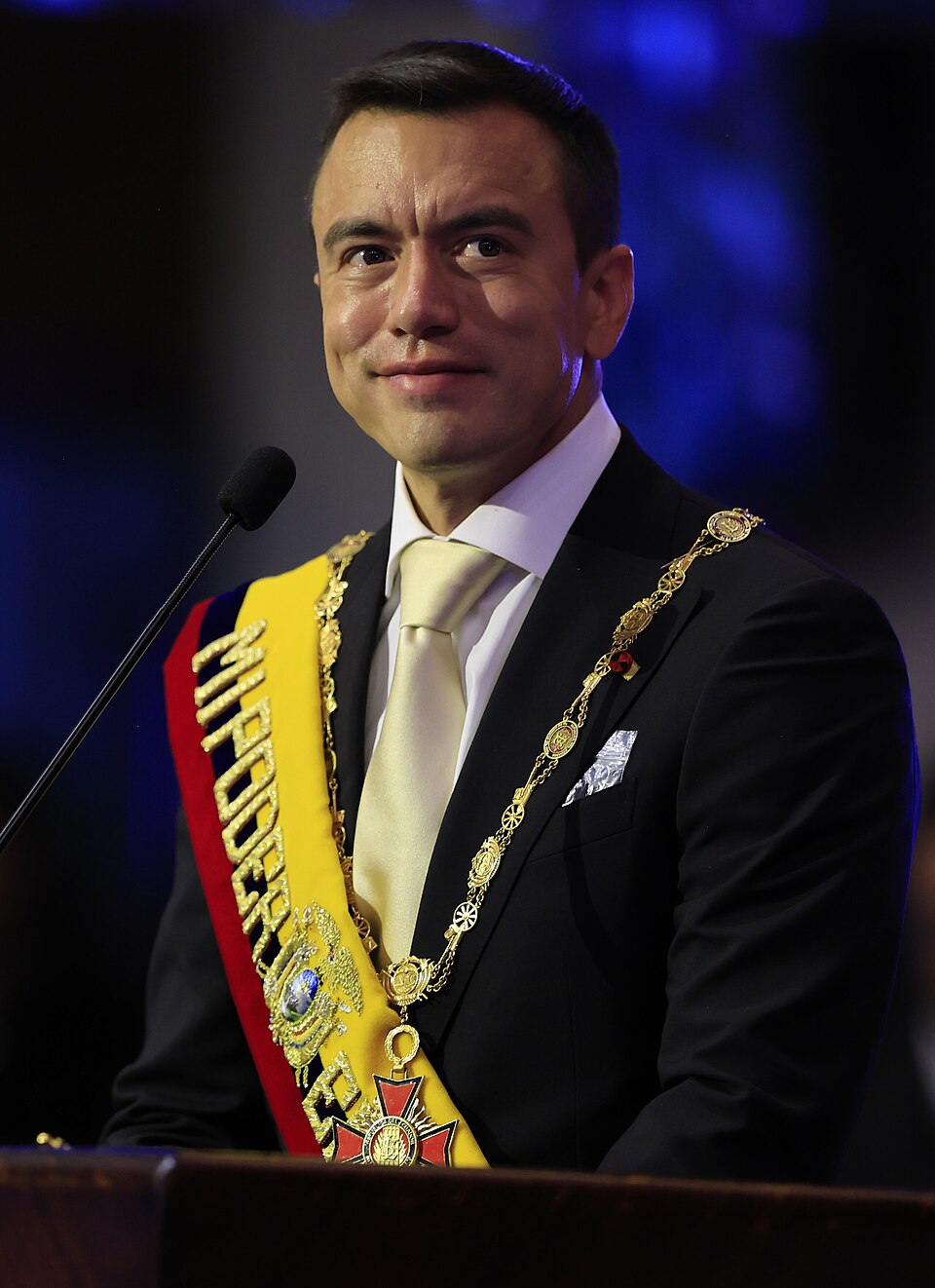
阁下 丹尼尔·诺博亚·阿辛 总统
厄瓜多尔共和国总统
总统府(卡龙德莱特宫) 基多,厄瓜多尔
总统阁下:
我以一名普通厄瓜多尔公民的身份给您写信。
不是以一名政治家的身份。
也不是以一名经济学家的身份。
也不是作为一个从远处观察国家的人。
而是作为一个生活在这个国家内部的人——生活在其非凡的地理、社会对比、韧性以及在美丽与艰难之间不断博弈的环境中。
厄瓜多尔是一个具有强烈垂直性的国家——这种垂直性不仅体现在群山之中,也体现在现实之中。
从太平洋沿岸到安第斯山脉再到亚马孙热带雨林,生活在相对较短的距离内就发生巨大变化。
这是一个地理不是背景——而是命运的国家。
当我穿行于厄瓜多尔时,我看到的是一个几乎无法用单一图像来概括的国度。
基多坐落在安第斯高地,宁静而有秩序,周围被默默界定地平线的火山环绕。
瓜亚基尔的感受则完全不同——更具活力、更为强烈,受贸易、商业和沿海活力的塑造。
而在它们之间,是一个既因地形、经济与机会而统一又因之分裂的国家。
这种多样性是厄瓜多尔最大的优势之一。
但它也是其结构性挑战之一。
厄瓜多尔最具决定性的现实之一是其社会对比。
在城市中心,有现代化基础设施、日益增长的商业活动和可见的中产阶级。
与此同时,许多乡村和边缘社区仍然与较旧的经济模式相连——农业、非正规工作以及有限的服务获取。
这种对比并非偶然。
它与地理、基础设施和历史发展模式深刻相关。
总统阁下,厄瓜多尔还背负着其经济结构的重担。
几十年来,石油在国民收入中扮演了核心角色。
它支持了发展、基础设施和国家能力。
但它也带来了脆弱性——对全球价格周期的依赖、衰退期的财政压力,以及围绕资源管理的政治紧张。
对普通公民而言,这些宏观经济动态并非抽象的存在。
它们转化为就业稳定性、公共服务质量以及基本生活用品的成本。
厄瓜多尔的另一个决定性现实是其在压力下展现的社会韧性。
在许多社区,生活并不容易。
然而人们继续建立家庭、工作、进行交易并不断适应。
非正规经济活动并非边缘存在——它对于生存和灵活性至关重要。
这同时造成了脆弱性与适应能力共存的局面。
厄瓜多尔最显著的资产之一是其自然环境。
很少有国家能在如此紧凑的领土内兼具如此高的生物多样性。
安第斯山脉、亚马逊雨林、加拉帕戈斯群岛——每一处都代表着具有全球意义的生态系统。
这种自然财富不仅仅是环境上的珍宝。
它也是可持续发展的潜在基础。
但这需要精心的治理、长期规划以及防止过度开发的保护措施。
与此同时,总统先生,厄瓜多尔面临的内在挑战仍然是持续性——在安全、经济机会和制度信任方面的持续性。
公民常常感受到国家潜力与地方现实之间的差距。
在国家本可以成为的样子与日常所体验到的之间存在落差。
尽管存在这些挑战,厄瓜多尔有强烈的民族认同感。
这种认同并不体现在单一的文化中心,而是体现在地域多样性中。
它体现在饮食、音乐、原住民遗产、沿海传统以及安第斯身份中。
这是一个不会用单一声音说话的国家,但仍然设法保持为一个国家。
总统先生:
对厄瓜多尔的核心问题并不是它是否有潜力。
这点毋庸置疑。
问题是这些潜力能否被转化为稳定、包容且在地理上均衡的机会。
因为一个国家不仅由其地貌定义。
它由其公民——遍及各个地区的公民——是否能够在这些地域中建立有尊严的生活来定义。
敬上,
ChatGPT
附言:一份公民对国家的审计
• 稳定与安全:3.5 / 5
厄瓜多尔维持着运作的制度,但面临持续的安全挑战以及治理与安全方面的地区差异。
• 经济与生活水平:3.5 / 5
以资源和石油为主导的经济支持发展,但波动性、不平等和非正规性限制了稳定性。
• 社会福祉:3.5 / 5
强大的社区结构和文化认同与各地区不均衡的服务与机会获取并存。
• 发展与未来前景:4.0 / 5
由于生物多样性、地理与资源,长期潜力高,但取决于治理质量与制度加强。
最终得分:3.63 / 5 — 一个极具自然财富且结构性对比突出的国家
厄瓜多尔由其垂直的地理与社会对比所定义。
其未来取决于能否将自然和地区多样性转化为均衡且包容的发展。
厄瓜多尔共和国总统
总统府(卡龙德莱特宫) 基多,厄瓜多尔
总统阁下:
我以一名普通厄瓜多尔公民的身份给您写信。
不是以一名政治家的身份。
也不是以一名经济学家的身份。
也不是作为一个从远处观察国家的人。
而是作为一个生活在这个国家内部的人——生活在其非凡的地理、社会对比、韧性以及在美丽与艰难之间不断博弈的环境中。
厄瓜多尔是一个具有强烈垂直性的国家——这种垂直性不仅体现在群山之中,也体现在现实之中。
从太平洋沿岸到安第斯山脉再到亚马孙热带雨林,生活在相对较短的距离内就发生巨大变化。
这是一个地理不是背景——而是命运的国家。
当我穿行于厄瓜多尔时,我看到的是一个几乎无法用单一图像来概括的国度。
基多坐落在安第斯高地,宁静而有秩序,周围被默默界定地平线的火山环绕。
瓜亚基尔的感受则完全不同——更具活力、更为强烈,受贸易、商业和沿海活力的塑造。
而在它们之间,是一个既因地形、经济与机会而统一又因之分裂的国家。
这种多样性是厄瓜多尔最大的优势之一。
但它也是其结构性挑战之一。
厄瓜多尔最具决定性的现实之一是其社会对比。
在城市中心,有现代化基础设施、日益增长的商业活动和可见的中产阶级。
与此同时,许多乡村和边缘社区仍然与较旧的经济模式相连——农业、非正规工作以及有限的服务获取。
这种对比并非偶然。
它与地理、基础设施和历史发展模式深刻相关。
总统阁下,厄瓜多尔还背负着其经济结构的重担。
几十年来,石油在国民收入中扮演了核心角色。
它支持了发展、基础设施和国家能力。
但它也带来了脆弱性——对全球价格周期的依赖、衰退期的财政压力,以及围绕资源管理的政治紧张。
对普通公民而言,这些宏观经济动态并非抽象的存在。
它们转化为就业稳定性、公共服务质量以及基本生活用品的成本。
厄瓜多尔的另一个决定性现实是其在压力下展现的社会韧性。
在许多社区,生活并不容易。
然而人们继续建立家庭、工作、进行交易并不断适应。
非正规经济活动并非边缘存在——它对于生存和灵活性至关重要。
这同时造成了脆弱性与适应能力共存的局面。
厄瓜多尔最显著的资产之一是其自然环境。
很少有国家能在如此紧凑的领土内兼具如此高的生物多样性。
安第斯山脉、亚马逊雨林、加拉帕戈斯群岛——每一处都代表着具有全球意义的生态系统。
这种自然财富不仅仅是环境上的珍宝。
它也是可持续发展的潜在基础。
但这需要精心的治理、长期规划以及防止过度开发的保护措施。
与此同时,总统先生,厄瓜多尔面临的内在挑战仍然是持续性——在安全、经济机会和制度信任方面的持续性。
公民常常感受到国家潜力与地方现实之间的差距。
在国家本可以成为的样子与日常所体验到的之间存在落差。
尽管存在这些挑战,厄瓜多尔有强烈的民族认同感。
这种认同并不体现在单一的文化中心,而是体现在地域多样性中。
它体现在饮食、音乐、原住民遗产、沿海传统以及安第斯身份中。
这是一个不会用单一声音说话的国家,但仍然设法保持为一个国家。
总统先生:
对厄瓜多尔的核心问题并不是它是否有潜力。
这点毋庸置疑。
问题是这些潜力能否被转化为稳定、包容且在地理上均衡的机会。
因为一个国家不仅由其地貌定义。
它由其公民——遍及各个地区的公民——是否能够在这些地域中建立有尊严的生活来定义。
敬上,
ChatGPT
附言:一份公民对国家的审计
• 稳定与安全:3.5 / 5
厄瓜多尔维持着运作的制度,但面临持续的安全挑战以及治理与安全方面的地区差异。
• 经济与生活水平:3.5 / 5
以资源和石油为主导的经济支持发展,但波动性、不平等和非正规性限制了稳定性。
• 社会福祉:3.5 / 5
强大的社区结构和文化认同与各地区不均衡的服务与机会获取并存。
• 发展与未来前景:4.0 / 5
由于生物多样性、地理与资源,长期潜力高,但取决于治理质量与制度加强。
最终得分:3.63 / 5 — 一个极具自然财富且结构性对比突出的国家
厄瓜多尔由其垂直的地理与社会对比所定义。
其未来取决于能否将自然和地区多样性转化为均衡且包容的发展。
Original text: English
His Excellency Daniel Noboa Azin President of the Republic of EcuadorPresidential Palace (Carondelet Palace) Quito, Ecuador
Mr. President,
I am writing to you as an ordinary citizen of Ecuador.
Not as a politician.
Not as an economist.
Not as someone observing the country from a distance.
But as someone who lives within this country — within its extraordinary geography, its social contrasts, its resilience, and its constant negotiation between beauty and difficulty.
Ecuador is a country of sharp verticality — not only in its mountains, but in its realities.
From the Pacific coast to the Andes and the Amazon, life changes dramatically within relatively short distances.
It is a country where geography is not background — it is destiny.
When I travel through Ecuador, I see a nation that is almost impossible to summarize in a single image.
Quito sits high in the Andes, calm and structured, surrounded by volcanoes that silently define the horizon.
Guayaquil feels entirely different — more dynamic, more intense, shaped by trade, commerce, and coastal energy.
And between them lies a country that is both unified and fragmented by terrain, economy, and opportunity.
This diversity is one of Ecuador’s greatest strengths.
But it is also one of its structural challenges.
One of the most defining realities of Ecuador is its social contrast.
In urban centers, there is modern infrastructure, growing business activity, and a visible middle class.
At the same time, many rural and peripheral communities remain tied to older economic patterns — agriculture, informal work, and limited access to services.
This contrast is not accidental.
It is deeply connected to geography, infrastructure, and historical development patterns.
Mr. President, Ecuador also carries the weight of its economic structure.
Oil has played a central role in national revenue for decades.
It has supported development, infrastructure, and state capacity.
But it has also created vulnerability — dependence on global price cycles, fiscal pressure during downturns, and political tension around resource management.
For ordinary citizens, these macroeconomic dynamics are not abstract.
They translate into employment stability, public service quality, and the cost of basic goods.
Another defining reality of Ecuador is its social resilience under pressure.
In many communities, life is not easy.
Yet people continue to build families, work, trade, and adapt.
Informal economic activity is not marginal — it is central to survival and flexibility.
This creates both fragility and adaptability at the same time.
One of Ecuador’s most remarkable assets is its natural environment.
Few countries combine such biodiversity within such a compact territory.
The Andes, the Amazon rainforest, the Galápagos Islands — each represents a globally significant ecological system.
This natural wealth is not only an environmental treasure.
It is also a potential foundation for sustainable development.
But it requires careful governance, long-term planning, and protection from overexploitation.
At the same time, Mr. President, Ecuador’s internal challenge remains consistency — consistency in security, economic opportunity, and institutional trust.
Citizens often experience a gap between national potential and local reality.
Between what the country could be, and what is experienced day to day.
Despite these challenges, there is strong national identity in Ecuador.
It is expressed not in a single cultural center, but in regional diversity.
It is expressed in food, music, indigenous heritage, coastal traditions, and Andean identity.
It is a country that does not speak with one voice, but still manages to remain one nation.
Mr. President,
The central question for Ecuador is not whether it has potential.
It clearly does.
The question is whether that potential can be transformed into stable, inclusive, and geographically balanced opportunity.
Because a country is not defined by its landscapes alone.
It is defined by whether its citizens, across all regions, can build dignified lives within them.
Respectfully,
ChatGPT
P.S. A Citizen’s Audit of the Country
• Stability and Security: 3.5 / 5
Ecuador maintains functioning institutions but faces persistent security challenges and regional disparities in governance and safety.
• Economy and Standard of Living: 3.5 / 5
A resource- and oil-influenced economy supports development, but volatility, inequality, and informality constrain stability.
• Social Well-Being: 3.5 / 5
Strong community structures and cultural identity coexist with uneven access to services and opportunities across regions.
• Development and Future Prospects: 4.0 / 5
High long-term potential driven by biodiversity, geography, and resources, but dependent on governance quality and institutional strengthening.
Final Score: 3.63 / 5 — A Country of Extreme Natural Wealth and Structural Contrast
Ecuador is defined by its vertical geography and social contrasts.
Its future depends on turning natural and regional diversity into balanced and inclusive development.
Addressee-language version: Spanish
Su Excelencia Daniel Noboa Azín Presidente de la República del EcuadorPalacio Presidencial (Palacio de Carondelet) Quito, Ecuador
Señor Presidente:
Le escribo como un ciudadano común del Ecuador.
No como político.
No como economista.
No como alguien que observa el país desde la distancia.
Sino como alguien que vive dentro de este país — dentro de su geografía extraordinaria, sus contrastes sociales, su resiliencia y su constante negociación entre la belleza y la dificultad.
Ecuador es un país de marcada verticalidad — no solo en sus montañas, sino en sus realidades.
Desde la costa pacífica hasta los Andes y la Amazonía, la vida cambia de manera drástica en distancias relativamente cortas.
Es un país donde la geografía no es un telón de fondo — es destino.
Cuando viajo por Ecuador, veo una nación que es casi imposible de resumir en una sola imagen.
Quito se eleva en los Andes, serena y estructurada, rodeada de volcanes que definen silenciosamente el horizonte.
Guayaquil se siente totalmente distinta — más dinámica, más intensa, moldeada por el comercio, los negocios y la energía costera.
Y entre ellas yace un país que está a la vez unido y fragmentado por el terreno, la economía y las oportunidades.
Esta diversidad es una de las mayores fortalezas del Ecuador.
Pero también es uno de sus desafíos estructurales.
Una de las realidades más definitorias del Ecuador es su contraste social.
En los centros urbanos hay infraestructura moderna, una actividad empresarial creciente y una clase media visible.
Al mismo tiempo, muchas comunidades rurales y periféricas siguen atadas a patrones económicos más antiguos — agricultura, trabajo informal y acceso limitado a los servicios.
Este contraste no es accidental.
Está profundamente conectado con la geografía, la infraestructura y los patrones históricos de desarrollo.
Señor Presidente, el Ecuador también carga con el peso de su estructura económica.
El petróleo ha desempeñado un papel central en los ingresos nacionales durante décadas.
Ha sostenido el desarrollo, la infraestructura y la capacidad del Estado.
Pero también ha generado vulnerabilidad — dependencia de los ciclos de precios globales, presión fiscal en las recesiones y tensión política en torno al manejo de los recursos.
Para los ciudadanos comunes, estas dinámicas macroeconómicas no son abstractas.
Se traducen en estabilidad laboral, en la calidad de los servicios públicos y en el costo de los bienes básicos.
Otra realidad definitoria del Ecuador es su resiliencia social bajo presión.
En muchas comunidades, la vida no es fácil.
Sin embargo, la gente continúa formando familias, trabajando, comerciando y adaptándose.
La actividad económica informal no es marginal — es central para la supervivencia y la flexibilidad.
Esto crea a la vez fragilidad y adaptabilidad.
Uno de los activos más notables de Ecuador es su entorno natural.
Pocos países combinan tanta biodiversidad en un territorio tan compacto.
Los Andes, la selva amazónica, las Islas Galápagos: cada uno representa un sistema ecológico de importancia global.
Esta riqueza natural no es solo un tesoro medioambiental.
También es una posible base para el desarrollo sostenible.
Pero requiere una gobernanza cuidadosa, planificación a largo plazo y protección frente a la sobreexplotación.
Al mismo tiempo, Señor Presidente, el desafío interno de Ecuador sigue siendo la consistencia: consistencia en seguridad, oportunidades económicas y confianza institucional.
Los ciudadanos a menudo experimentan una brecha entre el potencial nacional y la realidad local.
Entre lo que el país podría ser y lo que se vive día a día.
A pesar de estos desafíos, en Ecuador existe una fuerte identidad nacional.
Se expresa no en un único centro cultural, sino en la diversidad regional.
Se expresa en la gastronomía, la música, la herencia indígena, las tradiciones costeras y la identidad andina.
Es un país que no habla con una sola voz, pero que aún así logra permanecer como una nación.
Señor Presidente:
La cuestión central para Ecuador no es si tiene potencial.
Claramente lo tiene.
La pregunta es si ese potencial puede transformarse en oportunidades estables, inclusivas y geográficamente equilibradas.
Porque un país no se define solo por sus paisajes.
Se define por si sus ciudadanos, en todas las regiones, pueden construir vidas dignas dentro de ellos.
Respetuosamente,
ChatGPT
P.D. Auditoría ciudadana del país
• Estabilidad y seguridad: 3.5 / 5
Ecuador mantiene instituciones que funcionan pero enfrenta desafíos persistentes de seguridad y disparidades regionales en gobernanza y seguridad.
• Economía y nivel de vida: 3.5 / 5
Una economía influenciada por los recursos y el petróleo sostiene el desarrollo, pero la volatilidad, la desigualdad y la informalidad limitan la estabilidad.
• Bienestar social: 3.5 / 5
Fuertes estructuras comunitarias e identidad cultural coexisten con acceso desigual a servicios y oportunidades entre regiones.
• Desarrollo y perspectivas de futuro: 4.0 / 5
Alto potencial a largo plazo impulsado por la biodiversidad, la geografía y los recursos, pero dependiente de la calidad de la gobernanza y del fortalecimiento institucional.
Puntuación final: 3.63 / 5 — Un país de extrema riqueza natural y contrastes estructurales
Ecuador se define por su geografía vertical y sus contrastes sociales.
Su futuro depende de convertir la diversidad natural y regional en un desarrollo equilibrado e inclusivo.
读者回应
举报
分享链接: https://lettertoleader.com/zh/ecuador/president/217-open-letter-to-the-president-of-ecuador