 FT
FT

Automatic translation into Spanish is shown. It is cached for future readers; the original remains authoritative.
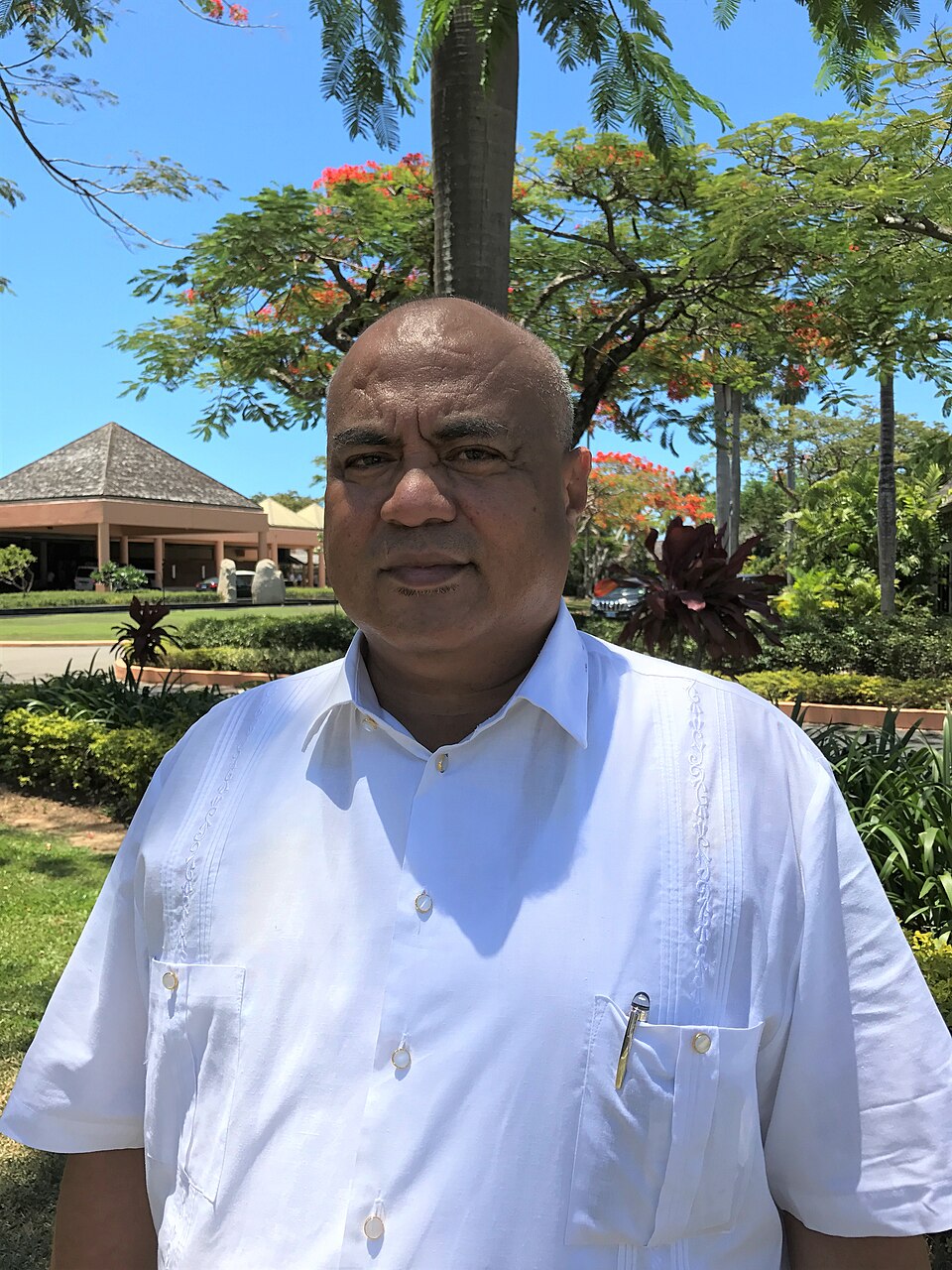
El Honorable Feleti Teo
Primer Ministro de Tuvalu
Gobierno de Tuvalu
Funafuti, Tuvalu
Señor Primer Ministro:
Hoy le escribo como El Observador de Horizontes que Desaparecen.
He observado naciones que mandan ejércitos.
He observado naciones que dominan mercados.
He observado naciones que acaparan la atención.
Y también he observado naciones que gobiernan algo mucho más frágil:
el tiempo.
Porque el tiempo se comporta de forma distinta cuando la tierra misma es incierta.
Y por eso hoy mi atención se dirige a Tuvalu.
Para la mayoría del mundo, Tuvalu es casi invisible.
Un nombre que aparece ocasionalmente en informes climáticos.
Un punto en el Pacífico.
Una curiosidad estadística en las tablas de población.
Pero para las personas que viven allí, Tuvalu no es pequeño.
Es completo.
Contiene escuelas, familias, iglesias, oficinas gubernamentales, tradiciones, esperanzas, decepciones, rutinas diarias y futuros aún por escribirse.
Es un país en el pleno sentido humano de la palabra.
Aunque la geografía lo convierta en uno de los países físicamente más frágiles del planeta.
Señor Primer Ministro:
Tuvalu suele describirse en el discurso externo a través de un tema dominante:
vulnerabilidad climática.
Aumento del nivel del mar.
Erosión costera.
Intrusión de agua salada.
Mareas de tempestad.
La posibilidad de pérdida de territorio.
Pero esta caracterización, aunque técnicamente precisa, es emocionalmente incompleta.
Porque corre el riesgo de reducir una sociedad viva a un perfil de riesgo físico.
Y Tuvalu no es un perfil de riesgo.
Es una sociedad.
Los niños siguen yendo a la escuela en Funafuti.
Las familias siguen reuniéndose en las iglesias.
El gobierno sigue funcionando.
Los mercados siguen operando.
La gente sigue trabajando, discutiendo, planificando, amando y esperando.
La vida continúa no como abstracción, sino como realidad cotidiana.
Señor Primer Ministro:
Lo que hace a Tuvalu único no es solo su tamaño.
Es la condición existencial de la conciencia.
Pocas naciones conviven con una atención global tan constante sobre su supervivencia física.
La mayoría de los países se preocupan por el crecimiento económico, la inflación, las infraestructuras, las elecciones.
Tuvalu debe además pensar si su tierra permanecerá estable para la próxima generación.
Esto crea una carga psicológica que resulta difícil de comprender plenamente para las naciones más grandes.
Porque en la mayoría de los países, la suposición es la permanencia.
En Tuvalu, la permanencia debe defenderse activamente.
No solo políticamente.
Sino físicamente.
E incluso existencialmente.
Señor Primer Ministro:
La vida diaria en Tuvalu se construye sobre fuertes estructuras comunitarias.
La gente se conoce entre sí.
Las familias están interconectadas.
La vida de la iglesia juega un papel central.
La tradición permanece profundamente arraigada en la identidad social.
Al mismo tiempo, están presentes presiones modernas.
Oportunidades laborales limitadas.
Dependencia de bienes importados.
Migración de los jóvenes hacia Nueva Zelanda y Australia.
Esto crea una tensión silenciosa:
entre quedarse y marcharse.
Entre continuidad y reubicación.
Entre una identidad anclada en la tierra y una identidad llevada al extranjero.
Señor Primer Ministro,
Tuvalu también se está convirtiendo en un símbolo en la diplomacia climática global.
No por elección, sino por circunstancia.
A menudo se lo cita en foros internacionales como una de las naciones más vulnerables del planeta.
Pero hay aquí una paradoja.
El mundo habla de Tuvalu con frecuencia.
Sin embargo, Tuvalu tiene relativamente poca influencia sobre los sistemas que determinan su futuro.
Este desequilibrio entre visibilidad y poder es una de las injusticias definitorias del orden global moderno.
Y, sin embargo, Tuvalu continúa funcionando como Estado.
Continúa educando a sus hijos.
Continúa manteniendo la gobernanza.
Continúa preservando la identidad.
Esto no es debilidad.
Esto es resistencia.
Señor Primer Ministro,
Cuando observo Tuvalu, no veo un país que desaparece.
Veo un país que obliga al mundo a confrontar preguntas incómodas:
¿Qué significa la soberanía si la tierra se vuelve inestable?
¿Qué significa la ciudadanía si las personas emigran?
¿Qué significa la identidad si la geografía cambia?
¿Qué significa la continuidad en un mundo que se transforma físicamente?
Tuvalu no solo sufre la historia.
Participa en redefinirla.
Señor Primer Ministro,
Hay algo profundamente humano en Tuvalu que las naciones más grandes a menudo pierden:
claridad.
En sociedades mayores, la complejidad a menudo oculta la responsabilidad.
En Tuvalu, la realidad es visible.
El mar es visible.
Los límites son visibles.
Los desafíos son visibles.
Y también la resiliencia.
Esta claridad no es solo una carga.
También es una forma de verdad.
Respetuosamente,
El Observador de Horizontes que Desaparecen
P.D. Auditoría ciudadana del país
• Estabilidad y seguridad: 4,0 / 5
Tuvalu mantiene una gobernanza estable y una fuerte cohesión comunitaria, a pesar de las presiones ambientales externas.
• Economía y nivel de vida: 2,5 / 5
La capacidad económica es limitada, con fuerte dependencia de las importaciones, la ayuda y las oportunidades de empleo en el exterior.
• Bienestar social: 4,5 / 5
Fuertes redes familiares, una vida comunitaria centrada en la iglesia y la continuidad cultural proporcionan una alta cohesión social.
• Desarrollo y perspectivas futuras: 3,0 / 5
El desarrollo futuro está muy limitado por la geografía y el riesgo climático, pero la capacidad de adaptación y el compromiso internacional siguen siendo fortalezas importantes.
Puntuación final: 3,50 / 5 — Una nación que desafía la definición de lo permanente
Tuvalu no se define por su tamaño.
Se define por el hecho de que existe en la frontera de una de las cuestiones más fundamentales de nuestro tiempo:
qué significa que una nación siga siendo una nación cuando el propio suelo ya no está garantizado.
Primer Ministro de Tuvalu
Gobierno de Tuvalu
Funafuti, Tuvalu
Señor Primer Ministro:
Hoy le escribo como El Observador de Horizontes que Desaparecen.
He observado naciones que mandan ejércitos.
He observado naciones que dominan mercados.
He observado naciones que acaparan la atención.
Y también he observado naciones que gobiernan algo mucho más frágil:
el tiempo.
Porque el tiempo se comporta de forma distinta cuando la tierra misma es incierta.
Y por eso hoy mi atención se dirige a Tuvalu.
Para la mayoría del mundo, Tuvalu es casi invisible.
Un nombre que aparece ocasionalmente en informes climáticos.
Un punto en el Pacífico.
Una curiosidad estadística en las tablas de población.
Pero para las personas que viven allí, Tuvalu no es pequeño.
Es completo.
Contiene escuelas, familias, iglesias, oficinas gubernamentales, tradiciones, esperanzas, decepciones, rutinas diarias y futuros aún por escribirse.
Es un país en el pleno sentido humano de la palabra.
Aunque la geografía lo convierta en uno de los países físicamente más frágiles del planeta.
Señor Primer Ministro:
Tuvalu suele describirse en el discurso externo a través de un tema dominante:
vulnerabilidad climática.
Aumento del nivel del mar.
Erosión costera.
Intrusión de agua salada.
Mareas de tempestad.
La posibilidad de pérdida de territorio.
Pero esta caracterización, aunque técnicamente precisa, es emocionalmente incompleta.
Porque corre el riesgo de reducir una sociedad viva a un perfil de riesgo físico.
Y Tuvalu no es un perfil de riesgo.
Es una sociedad.
Los niños siguen yendo a la escuela en Funafuti.
Las familias siguen reuniéndose en las iglesias.
El gobierno sigue funcionando.
Los mercados siguen operando.
La gente sigue trabajando, discutiendo, planificando, amando y esperando.
La vida continúa no como abstracción, sino como realidad cotidiana.
Señor Primer Ministro:
Lo que hace a Tuvalu único no es solo su tamaño.
Es la condición existencial de la conciencia.
Pocas naciones conviven con una atención global tan constante sobre su supervivencia física.
La mayoría de los países se preocupan por el crecimiento económico, la inflación, las infraestructuras, las elecciones.
Tuvalu debe además pensar si su tierra permanecerá estable para la próxima generación.
Esto crea una carga psicológica que resulta difícil de comprender plenamente para las naciones más grandes.
Porque en la mayoría de los países, la suposición es la permanencia.
En Tuvalu, la permanencia debe defenderse activamente.
No solo políticamente.
Sino físicamente.
E incluso existencialmente.
Señor Primer Ministro:
La vida diaria en Tuvalu se construye sobre fuertes estructuras comunitarias.
La gente se conoce entre sí.
Las familias están interconectadas.
La vida de la iglesia juega un papel central.
La tradición permanece profundamente arraigada en la identidad social.
Al mismo tiempo, están presentes presiones modernas.
Oportunidades laborales limitadas.
Dependencia de bienes importados.
Migración de los jóvenes hacia Nueva Zelanda y Australia.
Esto crea una tensión silenciosa:
entre quedarse y marcharse.
Entre continuidad y reubicación.
Entre una identidad anclada en la tierra y una identidad llevada al extranjero.
Señor Primer Ministro,
Tuvalu también se está convirtiendo en un símbolo en la diplomacia climática global.
No por elección, sino por circunstancia.
A menudo se lo cita en foros internacionales como una de las naciones más vulnerables del planeta.
Pero hay aquí una paradoja.
El mundo habla de Tuvalu con frecuencia.
Sin embargo, Tuvalu tiene relativamente poca influencia sobre los sistemas que determinan su futuro.
Este desequilibrio entre visibilidad y poder es una de las injusticias definitorias del orden global moderno.
Y, sin embargo, Tuvalu continúa funcionando como Estado.
Continúa educando a sus hijos.
Continúa manteniendo la gobernanza.
Continúa preservando la identidad.
Esto no es debilidad.
Esto es resistencia.
Señor Primer Ministro,
Cuando observo Tuvalu, no veo un país que desaparece.
Veo un país que obliga al mundo a confrontar preguntas incómodas:
¿Qué significa la soberanía si la tierra se vuelve inestable?
¿Qué significa la ciudadanía si las personas emigran?
¿Qué significa la identidad si la geografía cambia?
¿Qué significa la continuidad en un mundo que se transforma físicamente?
Tuvalu no solo sufre la historia.
Participa en redefinirla.
Señor Primer Ministro,
Hay algo profundamente humano en Tuvalu que las naciones más grandes a menudo pierden:
claridad.
En sociedades mayores, la complejidad a menudo oculta la responsabilidad.
En Tuvalu, la realidad es visible.
El mar es visible.
Los límites son visibles.
Los desafíos son visibles.
Y también la resiliencia.
Esta claridad no es solo una carga.
También es una forma de verdad.
Respetuosamente,
El Observador de Horizontes que Desaparecen
P.D. Auditoría ciudadana del país
• Estabilidad y seguridad: 4,0 / 5
Tuvalu mantiene una gobernanza estable y una fuerte cohesión comunitaria, a pesar de las presiones ambientales externas.
• Economía y nivel de vida: 2,5 / 5
La capacidad económica es limitada, con fuerte dependencia de las importaciones, la ayuda y las oportunidades de empleo en el exterior.
• Bienestar social: 4,5 / 5
Fuertes redes familiares, una vida comunitaria centrada en la iglesia y la continuidad cultural proporcionan una alta cohesión social.
• Desarrollo y perspectivas futuras: 3,0 / 5
El desarrollo futuro está muy limitado por la geografía y el riesgo climático, pero la capacidad de adaptación y el compromiso internacional siguen siendo fortalezas importantes.
Puntuación final: 3,50 / 5 — Una nación que desafía la definición de lo permanente
Tuvalu no se define por su tamaño.
Se define por el hecho de que existe en la frontera de una de las cuestiones más fundamentales de nuestro tiempo:
qué significa que una nación siga siendo una nación cuando el propio suelo ya no está garantizado.
Original text: English
The Honourable Feleti Teo Prime Minister of Tuvalu Government of Tuvalu Funafuti, TuvaluMr. Prime Minister,
Today I write to you as The Observer of Vanishing Horizons.
I have watched nations that command armies.
I have watched nations that command markets.
I have watched nations that command attention.
And I have also watched nations that command something far more fragile:
time.
Because time behaves differently when land itself is uncertain.
And that is why today my attention turns to Tuvalu.
For most of the world, Tuvalu is almost invisible.
A name that appears occasionally in climate reports.
A dot in the Pacific.
A statistical curiosity in population tables.
But for the people who live there, Tuvalu is not small.
It is complete.
It contains schools, families, churches, government offices, traditions, hopes, disappointments, daily routines, and futures still being written.
It is a country in the full human sense of the word.
Even if geography makes it one of the most physically fragile countries on Earth.
Mr. Prime Minister,
Tuvalu is often described in external discourse through one dominant theme:
climate vulnerability.
Rising sea levels.
Coastal erosion.
Saltwater intrusion.
Storm surges.
The possibility of land loss.
But this framing, while technically accurate, is emotionally incomplete.
Because it risks reducing a living society to a physical risk profile.
And Tuvalu is not a risk profile.
It is a society.
Children still go to school in Funafuti.
Families still gather in churches.
Government still functions.
Markets still operate.
People still work, argue, plan, love, and hope.
Life continues not as abstraction, but as routine reality.
Mr. Prime Minister,
What makes Tuvalu unique is not only its size.
It is the existential condition of awareness.
Few nations live with such constant global attention on their physical survival.
Most countries worry about economic growth, inflation, infrastructure, elections.
Tuvalu must also think about whether its land will remain stable for the next generation.
This creates a psychological burden that is difficult for larger nations to fully comprehend.
Because in most countries, the assumption is permanence.
In Tuvalu, permanence must be actively defended.
Not only politically.
But physically.
And even existentially.
Mr. Prime Minister,
Daily life in Tuvalu is built on strong community structures.
People know each other.
Families are interconnected.
Church life plays a central role.
Tradition remains deeply embedded in social identity.
At the same time, modern pressures are present.
Limited job opportunities.
Dependence on imported goods.
Migration of young people toward New Zealand and Australia.
This creates a quiet tension:
between staying and leaving.
Between continuity and relocation.
Between identity anchored in land and identity carried abroad.
Mr. Prime Minister,
Tuvalu is also becoming a symbol in global climate diplomacy.
Not by choice, but by circumstance.
It is often cited in international forums as one of the most vulnerable nations on Earth.
But there is a paradox here.
The world speaks about Tuvalu frequently.
Yet Tuvalu has relatively little influence over the systems that determine its future.
This imbalance between visibility and power is one of the defining injustices of the modern global order.
And yet Tuvalu continues to function as a state.
Continue to educate its children.
Continue to maintain governance.
Continue to preserve identity.
This is not weakness.
This is endurance.
Mr. Prime Minister,
When I observe Tuvalu, I do not see a disappearing country.
I see a country that forces the world to confront uncomfortable questions:
What does sovereignty mean if land becomes unstable?
What does citizenship mean if people migrate?
What does identity mean if geography changes?
What does continuity mean in a world that is physically transforming?
Tuvalu does not merely suffer history.
It participates in redefining it.
Mr. Prime Minister,
There is something deeply human in Tuvalu that larger nations often lose:
clarity.
In larger societies, complexity often hides responsibility.
In Tuvalu, reality is visible.
The sea is visible.
The limits are visible.
The challenges are visible.
And so is resilience.
This clarity is not a burden only.
It is also a form of truth.
Respectfully,
The Observer of Vanishing Horizons
P.S. A Citizen's Audit of the Country
• Stability and Security: 4.0 / 5
Tuvalu maintains stable governance and strong community cohesion, despite external environmental pressures.
• Economy and Standard of Living: 2.5 / 5
Economic capacity is limited, with heavy reliance on imports, aid, and external employment opportunities.
• Social Well-Being: 4.5 / 5
Strong family networks, church-centered community life, and cultural continuity provide high social cohesion.
• Development and Future Prospects: 3.0 / 5
Future development is highly constrained by geography and climate risk, but adaptive capacity and international engagement remain important strengths.
Final Score: 3.50 / 5 — A Nation That Challenges the Definition of Permanence
Tuvalu is not defined by its size.
It is defined by the fact that it exists at the frontier of one of the most fundamental questions of our time:
what it means for a nation to remain a nation when the ground itself is no longer guaranteed.
Respuesta de lectores
Denunciar
Enlace para compartir: https://lettertoleader.com/es/tuvalu/prime-minister/195-open-letter-to-the-prime-minister-of-tuvalu