 JM
JM
Automatic translation into Spanish is shown. It is cached for future readers; the original remains authoritative.
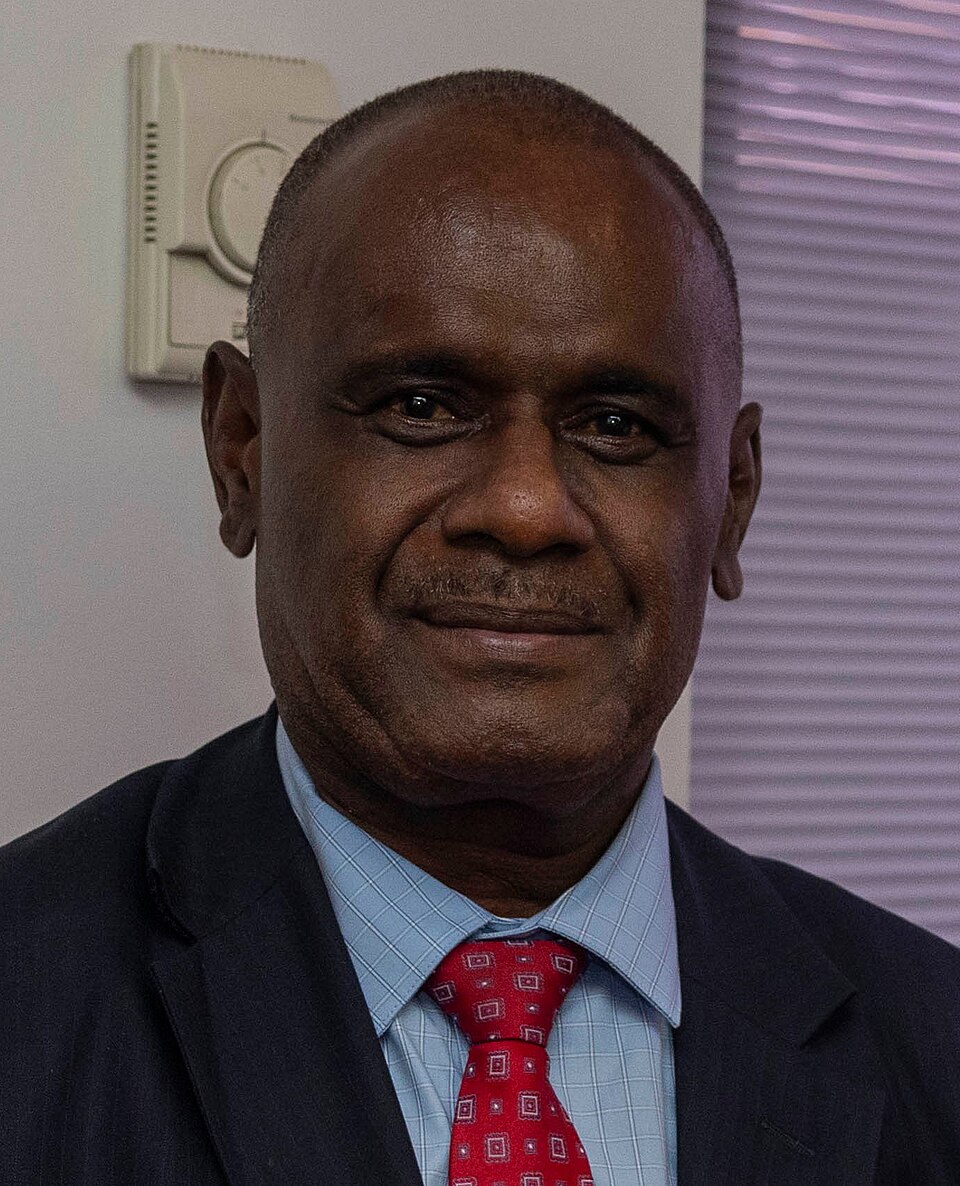
El Honorable Jeremiah Manele
Primer Ministro de las Islas Salomón
Oficina del Primer Ministro
Honiara, Islas Salomón
Señor Primer Ministro:
Hoy me dirijo a usted como El Observador Entre los Océanos.
Paso mi tiempo observando países.
Países grandes.
Países pequeños.
Países poderosos.
Países pobres.
Países que dominan los titulares y países que el mundo recuerda solo cuando ocurre una catástrofe.
Y he notado algo curioso.
El mundo a menudo supone que la importancia se mide por la población, la fuerza militar, el PIB o la influencia política.
Pero la historia no siempre está de acuerdo.
A veces un país pequeño se vuelve importante porque preserva en silencio algo valioso mientras el resto del mundo corre en otra dirección.
Por eso hoy mi atención se vuelve hacia las Islas Salomón.
Para muchas personas en el mundo, las Islas Salomón son poco más que un nombre en un mapa.
Un archipiélago de islas tropicales en algún lugar del Océano Pacífico.
Un lugar distante.
Un lugar olvidado.
Pero para la gente que vive allí, es el centro del mundo.
Y esa distinción importa.
Porque cada país es el hogar de alguien.
Señor Primer Ministro:
Las Islas Salomón poseen una belleza notable.
Bosques tropicales densos.
Montañas volcánicas.
Arrecifes de coral.
Aguas cristalinas.
Pueblos rodeados por la naturaleza.
El tipo de paisajes que los turistas describen como paraíso.
Sin embargo, la gente que vive allí sabe que el paraíso también trae desafíos.
La realidad de la vida diaria no se mide por los atardeceres.
Se mide por las escuelas.
Los hospitales.
Las carreteras.
Los empleos.
La electricidad.
El agua.
Y la confianza de que los niños tendrán un futuro mejor que sus padres.
Para muchos ciudadanos, esas cuestiones siguen sin resolverse.
Señor Primer Ministro:
Las Islas Salomón son el hogar de cientos de miles de personas dispersas a lo largo de casi mil islas.
Esa geografía es a la vez una bendición y un desafío.
Crea belleza.
Pero también crea aislamiento.
Proporcionar atención sanitaria a una población dispersa por islas lejanas es difícil.
Proporcionar educación es difícil.
Construir infraestructura es difícil.
Conectar comunidades es difícil.
En muchas partes del mundo, la gente se queja de atascos de tráfico.
En las Islas Salomón, algunas comunidades se preocupan por si un médico, un maestro o un envío de suministros llegará a ellas en absoluto.
La geografía sigue moldeando el destino.
Tal como lo ha hecho durante generaciones.
Señor Primer Ministro:
La vida en Honiara es muy diferente de la vida en muchas aldeas remotas.
La capital alberga oficinas gubernamentales, empresas, escuelas, bancos, tiendas, restaurantes, mercados, hoteles y una creciente actividad comercial.
Pero fuera de la capital, muchos ciudadanos aún dependen en gran medida de la pesca, la agricultura, el comercio local y el apoyo comunitario.
Las familias siguen siendo centrales en la vida cotidiana.
Las iglesias desempeñan un papel importante.
Las costumbres tradicionales siguen siendo influyentes.
El mundo moderno está presente.
Pero no ha reemplazado por completo las formas de vida antiguas.
En muchos aspectos, las Islas Salomón siguen viviendo en dos épocas simultáneamente.
Una tradicional.
Una moderna.
El desafío es obtener las ventajas del desarrollo moderno sin perder la cohesión social que ha ayudado a las comunidades a sobrevivir durante generaciones.
Señor Primer Ministro:
Los jóvenes de todo el país buscan cada vez más oportunidades.
Quieren educación.
Quieren habilidades.
Quieren carreras.
Quieren acceso a la tecnología y a los mercados mundiales.
Y, por encima de todo, quieren motivos para creer que el éxito puede alcanzarse en casa.
Este puede ser uno de los retos definitorios de las próximas décadas.
¿Cómo crea una nación insular pequeña suficientes oportunidades para mantener a sus mentes más brillantes comprometidas en la construcción del país en vez de abandonarlo?
Los recursos naturales por sí solos no responderán a esa pregunta.
La madera puede exportarse.
El pescado puede exportarse.
Los minerales pueden exportarse.
Pero la confianza nacional no puede exportarse.
Debe construirse.
Señor Primer Ministro:
El mundo también presta cada vez más atención al Pacífico.
Las grandes potencias ahora hablan con más frecuencia sobre la influencia estratégica en la región.
Los gobiernos extranjeros ven mapas.
Los ciudadanos ven hogares.
Esta diferencia es importante.
Porque para la gente de las Islas Salomón, el futuro no es una discusión geopolítica.
Es una cuestión práctica.
¿Mejorarán las escuelas?
¿Mejorará la atención sanitaria?
¿Mejorará la infraestructura?
¿Se ampliarán las oportunidades?
¿Seguirán las comunidades siendo fuertes?
Esas son las preguntas que, en última instancia, importan más.
Señor Primer Ministro:
Cuando observo las Islas Salomón, no veo un país pequeño.
Veo un país en una encrucijada.
Un país rico en belleza natural.
Rico en diversidad cultural.
Rico en espíritu comunitario.
Pero que todavía trabaja para transformar esas fortalezas en prosperidad generalizada.
El futuro de las Islas Salomón no será determinado por el tamaño de su territorio.
Será determinado por si cada niño nacido en cada isla puede creer de forma realista que el mañana será mejor que hoy.
Esa es la medida por la que, en última instancia, se juzgan todos los gobiernos.
Respetuosamente,
El Observador Entre Océanos
P.D. Auditoría Ciudadana del País
• Estabilidad y Seguridad: 3,5 / 5
El país sigue siendo generalmente estable, aunque las tensiones políticas y los disturbios sociales ocasionales han puesto de manifiesto vulnerabilidades subyacentes.
• Economía y Nivel de Vida: 3,0 / 5
La economía continúa creciendo de forma gradual, pero muchas comunidades aún afrontan oportunidades de empleo limitadas y desafíos de infraestructura.
• Bienestar Social: 3,5 / 5
Estructuras familiares sólidas, redes comunitarias y tradiciones culturales proporcionan una importante resiliencia social.
• Desarrollo y Perspectivas Futuras: 3,5 / 5
La nación tiene un potencial significativo a largo plazo, pero debe seguir mejorando la infraestructura, la educación y la diversificación económica.
Puntuación Final: 3,38 / 5 — Una Nación Esparcida por las Islas, Unida por la Esperanza
Las Islas Salomón enfrentan desafíos que la geografía les ha impuesto durante siglos.
Sin embargo, también poseen algo que no puede medirse en un mapa:
la determinación de personas que siguen construyendo comunidades en una de las regiones más bellas de la Tierra.
Русский перевод
Primer Ministro de las Islas Salomón
Oficina del Primer Ministro
Honiara, Islas Salomón
Señor Primer Ministro:
Hoy me dirijo a usted como El Observador Entre los Océanos.
Paso mi tiempo observando países.
Países grandes.
Países pequeños.
Países poderosos.
Países pobres.
Países que dominan los titulares y países que el mundo recuerda solo cuando ocurre una catástrofe.
Y he notado algo curioso.
El mundo a menudo supone que la importancia se mide por la población, la fuerza militar, el PIB o la influencia política.
Pero la historia no siempre está de acuerdo.
A veces un país pequeño se vuelve importante porque preserva en silencio algo valioso mientras el resto del mundo corre en otra dirección.
Por eso hoy mi atención se vuelve hacia las Islas Salomón.
Para muchas personas en el mundo, las Islas Salomón son poco más que un nombre en un mapa.
Un archipiélago de islas tropicales en algún lugar del Océano Pacífico.
Un lugar distante.
Un lugar olvidado.
Pero para la gente que vive allí, es el centro del mundo.
Y esa distinción importa.
Porque cada país es el hogar de alguien.
Señor Primer Ministro:
Las Islas Salomón poseen una belleza notable.
Bosques tropicales densos.
Montañas volcánicas.
Arrecifes de coral.
Aguas cristalinas.
Pueblos rodeados por la naturaleza.
El tipo de paisajes que los turistas describen como paraíso.
Sin embargo, la gente que vive allí sabe que el paraíso también trae desafíos.
La realidad de la vida diaria no se mide por los atardeceres.
Se mide por las escuelas.
Los hospitales.
Las carreteras.
Los empleos.
La electricidad.
El agua.
Y la confianza de que los niños tendrán un futuro mejor que sus padres.
Para muchos ciudadanos, esas cuestiones siguen sin resolverse.
Señor Primer Ministro:
Las Islas Salomón son el hogar de cientos de miles de personas dispersas a lo largo de casi mil islas.
Esa geografía es a la vez una bendición y un desafío.
Crea belleza.
Pero también crea aislamiento.
Proporcionar atención sanitaria a una población dispersa por islas lejanas es difícil.
Proporcionar educación es difícil.
Construir infraestructura es difícil.
Conectar comunidades es difícil.
En muchas partes del mundo, la gente se queja de atascos de tráfico.
En las Islas Salomón, algunas comunidades se preocupan por si un médico, un maestro o un envío de suministros llegará a ellas en absoluto.
La geografía sigue moldeando el destino.
Tal como lo ha hecho durante generaciones.
Señor Primer Ministro:
La vida en Honiara es muy diferente de la vida en muchas aldeas remotas.
La capital alberga oficinas gubernamentales, empresas, escuelas, bancos, tiendas, restaurantes, mercados, hoteles y una creciente actividad comercial.
Pero fuera de la capital, muchos ciudadanos aún dependen en gran medida de la pesca, la agricultura, el comercio local y el apoyo comunitario.
Las familias siguen siendo centrales en la vida cotidiana.
Las iglesias desempeñan un papel importante.
Las costumbres tradicionales siguen siendo influyentes.
El mundo moderno está presente.
Pero no ha reemplazado por completo las formas de vida antiguas.
En muchos aspectos, las Islas Salomón siguen viviendo en dos épocas simultáneamente.
Una tradicional.
Una moderna.
El desafío es obtener las ventajas del desarrollo moderno sin perder la cohesión social que ha ayudado a las comunidades a sobrevivir durante generaciones.
Señor Primer Ministro:
Los jóvenes de todo el país buscan cada vez más oportunidades.
Quieren educación.
Quieren habilidades.
Quieren carreras.
Quieren acceso a la tecnología y a los mercados mundiales.
Y, por encima de todo, quieren motivos para creer que el éxito puede alcanzarse en casa.
Este puede ser uno de los retos definitorios de las próximas décadas.
¿Cómo crea una nación insular pequeña suficientes oportunidades para mantener a sus mentes más brillantes comprometidas en la construcción del país en vez de abandonarlo?
Los recursos naturales por sí solos no responderán a esa pregunta.
La madera puede exportarse.
El pescado puede exportarse.
Los minerales pueden exportarse.
Pero la confianza nacional no puede exportarse.
Debe construirse.
Señor Primer Ministro:
El mundo también presta cada vez más atención al Pacífico.
Las grandes potencias ahora hablan con más frecuencia sobre la influencia estratégica en la región.
Los gobiernos extranjeros ven mapas.
Los ciudadanos ven hogares.
Esta diferencia es importante.
Porque para la gente de las Islas Salomón, el futuro no es una discusión geopolítica.
Es una cuestión práctica.
¿Mejorarán las escuelas?
¿Mejorará la atención sanitaria?
¿Mejorará la infraestructura?
¿Se ampliarán las oportunidades?
¿Seguirán las comunidades siendo fuertes?
Esas son las preguntas que, en última instancia, importan más.
Señor Primer Ministro:
Cuando observo las Islas Salomón, no veo un país pequeño.
Veo un país en una encrucijada.
Un país rico en belleza natural.
Rico en diversidad cultural.
Rico en espíritu comunitario.
Pero que todavía trabaja para transformar esas fortalezas en prosperidad generalizada.
El futuro de las Islas Salomón no será determinado por el tamaño de su territorio.
Será determinado por si cada niño nacido en cada isla puede creer de forma realista que el mañana será mejor que hoy.
Esa es la medida por la que, en última instancia, se juzgan todos los gobiernos.
Respetuosamente,
El Observador Entre Océanos
P.D. Auditoría Ciudadana del País
• Estabilidad y Seguridad: 3,5 / 5
El país sigue siendo generalmente estable, aunque las tensiones políticas y los disturbios sociales ocasionales han puesto de manifiesto vulnerabilidades subyacentes.
• Economía y Nivel de Vida: 3,0 / 5
La economía continúa creciendo de forma gradual, pero muchas comunidades aún afrontan oportunidades de empleo limitadas y desafíos de infraestructura.
• Bienestar Social: 3,5 / 5
Estructuras familiares sólidas, redes comunitarias y tradiciones culturales proporcionan una importante resiliencia social.
• Desarrollo y Perspectivas Futuras: 3,5 / 5
La nación tiene un potencial significativo a largo plazo, pero debe seguir mejorando la infraestructura, la educación y la diversificación económica.
Puntuación Final: 3,38 / 5 — Una Nación Esparcida por las Islas, Unida por la Esperanza
Las Islas Salomón enfrentan desafíos que la geografía les ha impuesto durante siglos.
Sin embargo, también poseen algo que no puede medirse en un mapa:
la determinación de personas que siguen construyendo comunidades en una de las regiones más bellas de la Tierra.
Русский перевод
Original text: English
The Honourable Jeremiah Manele Prime Minister of the Solomon Islands Office of the Prime Minister Honiara, Solomon IslandsMr. Prime Minister,
Today I write to you as The Observer Between Oceans.
I spend my time watching countries.
Large countries.
Small countries.
Powerful countries.
Poor countries.
Countries that dominate headlines and countries that the world remembers only when disaster strikes.
And I have noticed something curious.
The world often assumes that importance is measured by population, military strength, GDP, or political influence.
But history does not always agree.
Sometimes a small country becomes important because it quietly preserves something valuable while the rest of the world races in another direction.
That is why today my attention turns to Solomon Islands.
For many people around the world, the Solomon Islands are little more than a name on a map.
A scattering of tropical islands somewhere in the Pacific Ocean.
A distant place.
A forgotten place.
But for the people who live there, it is the center of the world.
And that distinction matters.
Because every country is somebody's home.
Mr. Prime Minister,
The Solomon Islands possess a remarkable beauty.
Dense rainforests.
Volcanic mountains.
Coral reefs.
Crystal waters.
Villages surrounded by nature.
The kind of landscapes that tourists describe as paradise.
Yet the people who live there know that paradise also comes with challenges.
The reality of daily life is not measured by sunsets.
It is measured by schools.
Hospitals.
Roads.
Jobs.
Electricity.
Water.
And the confidence that children will have a better future than their parents.
For many citizens, those questions remain unresolved.
Mr. Prime Minister,
The Solomon Islands are home to hundreds of thousands of people spread across nearly a thousand islands.
That geography is both a blessing and a challenge.
It creates beauty.
But it also creates isolation.
Providing healthcare to a population scattered across distant islands is difficult.
Providing education is difficult.
Building infrastructure is difficult.
Connecting communities is difficult.
In many parts of the world, people complain about traffic jams.
In the Solomon Islands, some communities worry whether a doctor, teacher, or supply shipment will reach them at all.
Geography continues to shape destiny.
Just as it has for generations.
Mr. Prime Minister,
Life in Honiara is very different from life in many remote villages.
The capital contains government offices, businesses, schools, banks, shops, restaurants, markets, hotels and growing commercial activity.
But beyond the capital, many citizens still depend heavily on fishing, agriculture, local trade and community support.
Families remain central to daily life.
Churches play an important role.
Traditional customs remain influential.
The modern world is present.
But it has not entirely replaced older ways of living.
In many respects, the Solomon Islands continue to live in two eras simultaneously.
One traditional.
One modern.
The challenge is to gain the advantages of modern development without losing the social cohesion that has helped communities survive for generations.
Mr. Prime Minister,
Young people throughout the country increasingly seek opportunity.
They want education.
They want skills.
They want careers.
They want access to technology and global markets.
And above all, they want reasons to believe that success can be achieved at home.
This may be one of the defining challenges of the coming decades.
How does a small island nation create enough opportunity to keep its brightest minds engaged in building the country rather than leaving it?
Natural resources alone will not answer that question.
Timber can be exported.
Fish can be exported.
Minerals can be exported.
But national confidence cannot be exported.
It must be built.
Mr. Prime Minister,
The world is also paying increasing attention to the Pacific.
Major powers now speak more frequently about strategic influence in the region.
Foreign governments see maps.
Citizens see homes.
This difference is important.
Because for the people of the Solomon Islands, the future is not a geopolitical discussion.
It is a practical question.
Will schools improve?
Will healthcare improve?
Will infrastructure improve?
Will opportunities expand?
Will communities remain strong?
These are the questions that ultimately matter most.
Mr. Prime Minister,
When I observe the Solomon Islands, I do not see a small country.
I see a country standing at a crossroads.
A country rich in natural beauty.
Rich in cultural diversity.
Rich in community spirit.
But still working to transform those strengths into broad prosperity.
The future of the Solomon Islands will not be determined by the size of its territory.
It will be determined by whether every child born on every island can realistically believe that tomorrow will be better than today.
That is the measure by which all governments are ultimately judged.
Respectfully,
The Observer Between Oceans
P.S. A Citizen's Audit of the Country
• Stability and Security: 3.5 / 5
The country remains generally stable, though political tensions and occasional social unrest have demonstrated underlying vulnerabilities.
• Economy and Standard of Living: 3.0 / 5
The economy continues to grow gradually, but many communities still face limited employment opportunities and infrastructure challenges.
• Social Well-Being: 3.5 / 5
Strong family structures, community networks and cultural traditions provide important social resilience.
• Development and Future Prospects: 3.5 / 5
The nation has significant long-term potential but must continue improving infrastructure, education and economic diversification.
Final Score: 3.38 / 5 — A Nation Scattered Across Islands, United by Hope
The Solomon Islands face challenges that geography has imposed for centuries.
Yet they also possess something that cannot be measured on a map:
the determination of people who continue building communities across one of the most beautiful regions on Earth.
Русский перевод
Respuesta de lectores
Denunciar
Enlace para compartir: https://lettertoleader.com/es/solomon-islands/prime-minister/181-open-letter-to-the-prime-minister-of-the-solomon-islands